On this page
Taekwondo is one of the most popular children’s activities in the world, and in Korea nearly every neighborhood has a dojang full of elementary school students after the final bell. Its appeal to parents is easy to see: clear rules, visible progress through the belts, and a culture of respect built into every class. Whether it is a good fit for your child depends on their age and temperament, and even more on the school you choose.
What children actually get from it
The obvious benefit is fitness. Taekwondo is a full-body workout with a lot of jumping, kicking and stretching, and children who train regularly gain flexibility and balance that carry over to other sports. Because classes are indoors and year-round, it also works well for families who want steady activity through winter.
The less obvious benefits are the ones parents mention most. Every class starts and ends with bowing, lining up and listening, so children practice paying attention in a setting where everyone else is doing the same. The belt system gives them a long goal broken into small, reachable steps, which is a powerful lesson in persistence. And performing a form at a belt test, in front of a room of adults, builds the kind of confidence that shows up later in class presentations and recitals.
Studies on martial arts and children’s behavior are encouraging but modest. Several have found improvements in self-regulation and attention among children who train regularly, especially in programs that emphasize self-control over competition. That matches what many families see, though it depends heavily on how the school teaches.
The best age to start
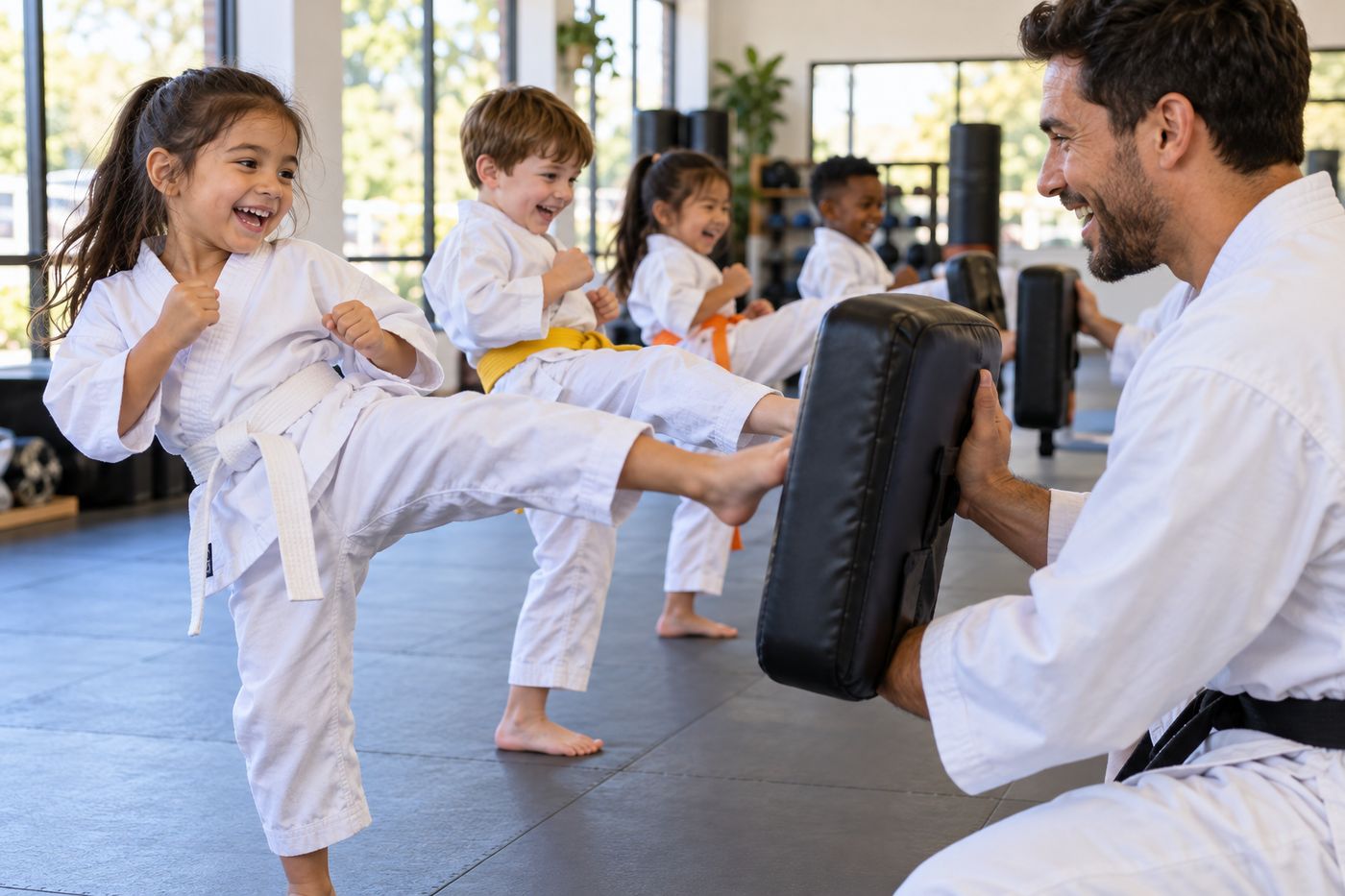
Most children are ready for a standard class between five and seven years old. At that age they can follow a three-step instruction, wait their turn and stay with an activity for most of an hour. Many schools run special classes for children three or four to six, often called “little tigers” or “little dragons,” with shorter sessions, more games and simpler skills like balance, coordination and listening.
There is no upper limit. Children who start at ten or twelve progress quickly because they can focus longer, and many teenagers begin without any disadvantage. If your child is younger than five and very active, a preschool class can be fun. If they are shy or easily overwhelmed, waiting a year often makes the start smoother.
How safe is it?
For children, Taekwondo is generally a low-injury activity when classes are well run. Most injuries are minor: bruised toes, sprained fingers and the occasional twisted ankle. Contact sparring is where more significant injuries happen, especially to the head, which is why good schools wait until students have solid control before they spar, require headgear and a full set of pads, and closely supervise every round. Children’s competition rules in many organizations restrict or ban kicks to the head for younger age groups.
Ask any school how and when sparring starts, and watch a sparring class before your child joins one.
Green flags in a school
The best schools share a few traits. Instructors know every child’s name and correct them individually. The class is organized, with clear lines and little standing around. Children are clearly having fun, but they stop when the instructor says stop. The school will give you a printed curriculum showing what each belt requires, and it can tell you which organization its black belts are registered with, usually the Kukkiwon for Olympic-style Taekwondo.
A good school will also let you watch classes freely, offer a trial before you sign anything, and explain its fees in writing.
Red flags
Be cautious if a school pushes you to sign a long contract after a single trial class, especially one that “guarantees” a black belt by a certain date. Be wary of instructors who shout at or shame children, of very large classes with one adult and no assistants, and of hard sparring for young children without protective gear. A school that cannot tell you where its black belt certificates come from is another warning sign.
Is it the right fit for your child?
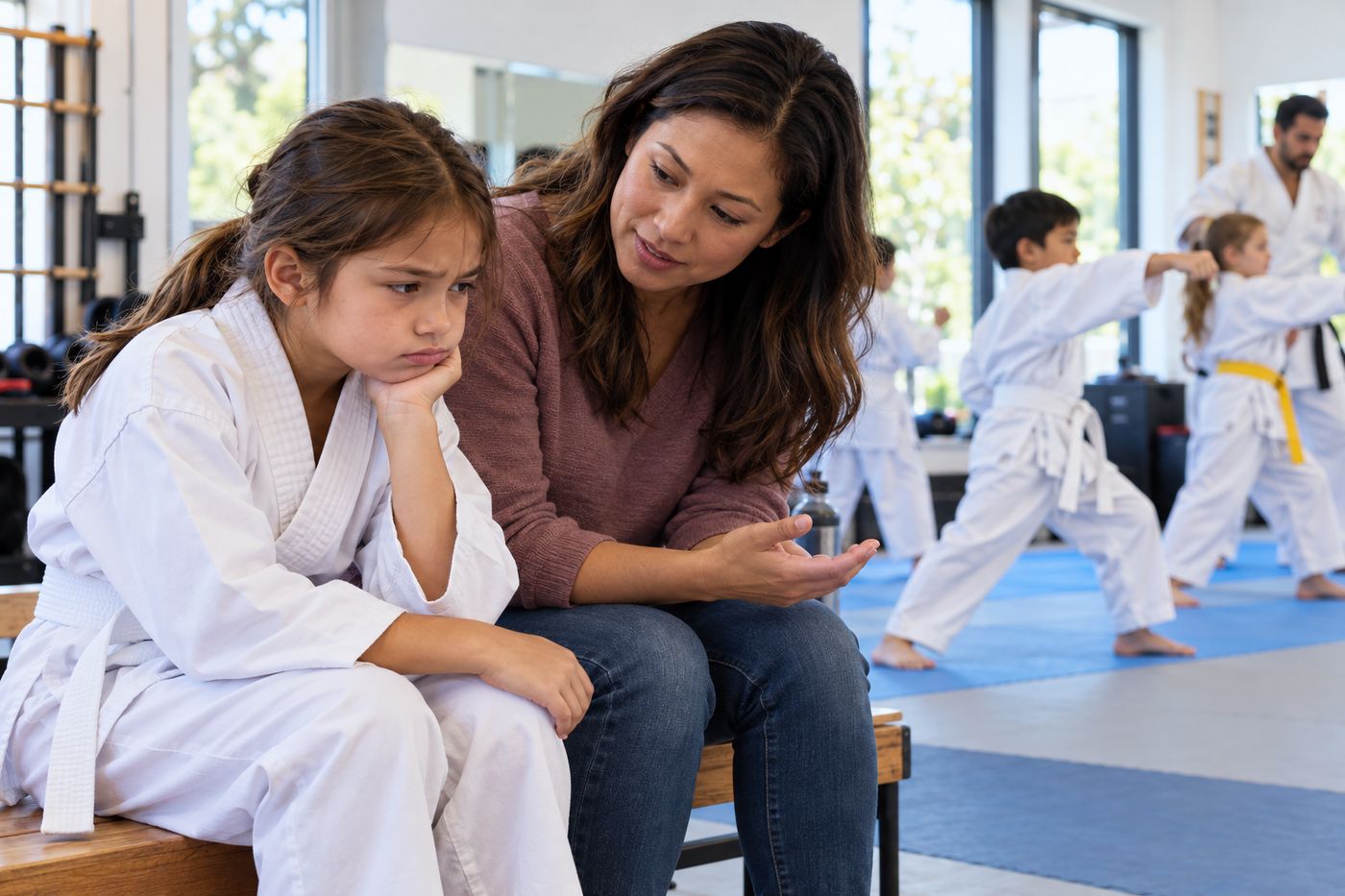
Taekwondo suits children who like clear rules and visible goals, and it can be especially good for children who are not drawn to team sports, since progress depends on their own effort. Children who dislike repetition may struggle with forms at first, though many grow to enjoy them. The best way to find out is a trial class or two, a quiet word with the instructor afterward, and a conversation with your child on the way home. If they’re demonstrating a front kick in the parking lot, you probably have your answer.
Questions parents and students ask
What age is best to start Taekwondo?
Most children are ready for a regular class between five and seven, when they can follow multi-step instructions for 45 minutes. Many schools run playful classes for ages three or four to six.
Is Taekwondo safe for children?
It is generally a low-injury activity for children when classes are well supervised and sparring uses full protective gear. Most injuries are minor sprains and bruises.
Does Taekwondo make kids more aggressive?
Research and most instructors' experience point the other way. Structured martial arts classes that teach self-control tend to be linked with fewer behavior problems, not more.
Is Taekwondo good for kids with ADHD?
Many families find the structure, clear routines and physical activity helpful. Talk to the instructor about your child's needs; good schools adapt easily.