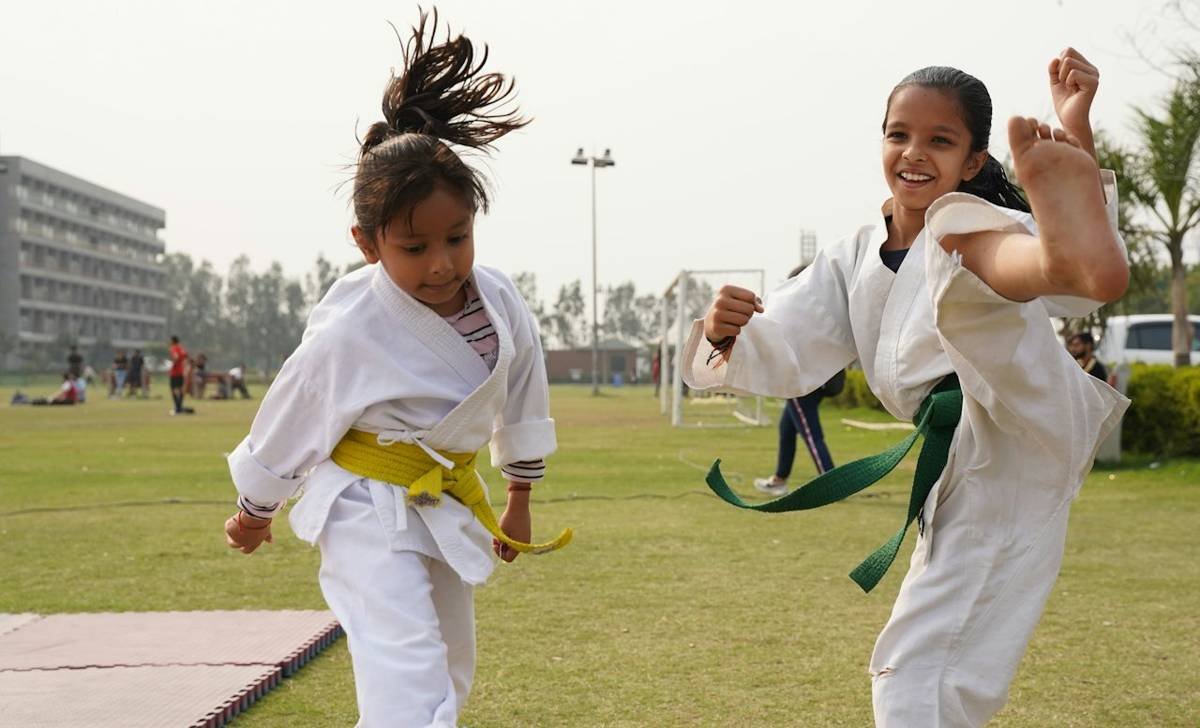
- Comes from
- Okinawa and Japan
- Type
- Striking, hands and feet
- Usual start
- About 4 to 6
- Olympic
- Tokyo 2020 only
- Typical cost
- $100 to $250 a month
- Ranks
- Kyu belts, then black
In one minute
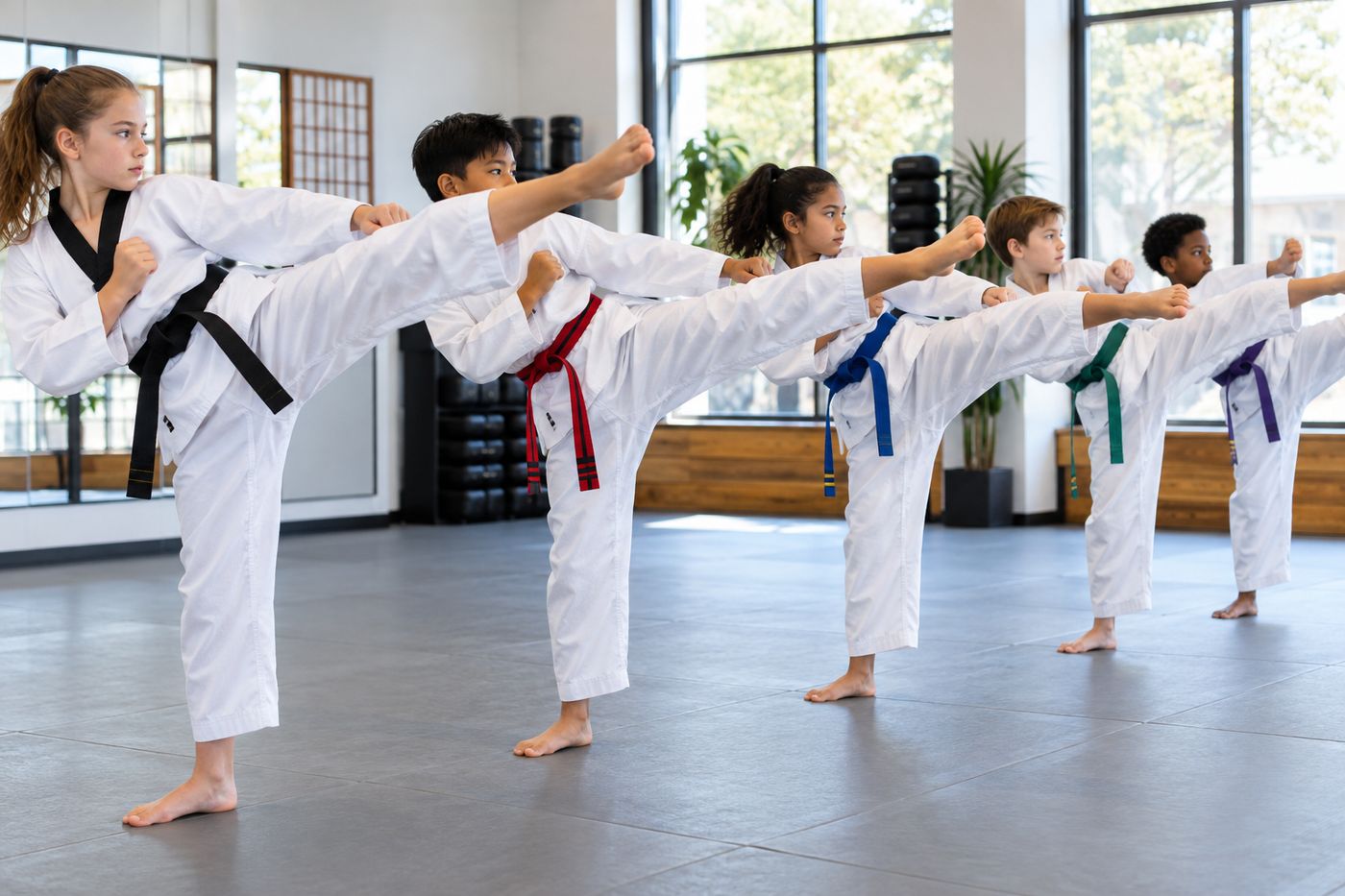
Karate grew up on the island of Okinawa and spread through mainland Japan in the early twentieth century. Today it comes in several main styles, including Shotokan, Goju-ryu, Shito-ryu, Wado-ryu and the full-contact Kyokushin, each with its own forms and emphasis.
Compared with Taekwondo, karate balances hands and feet more evenly and puts more weight on stances, basics and kata, the traditional solo forms. Many children find its calm, structured classes a great fit.
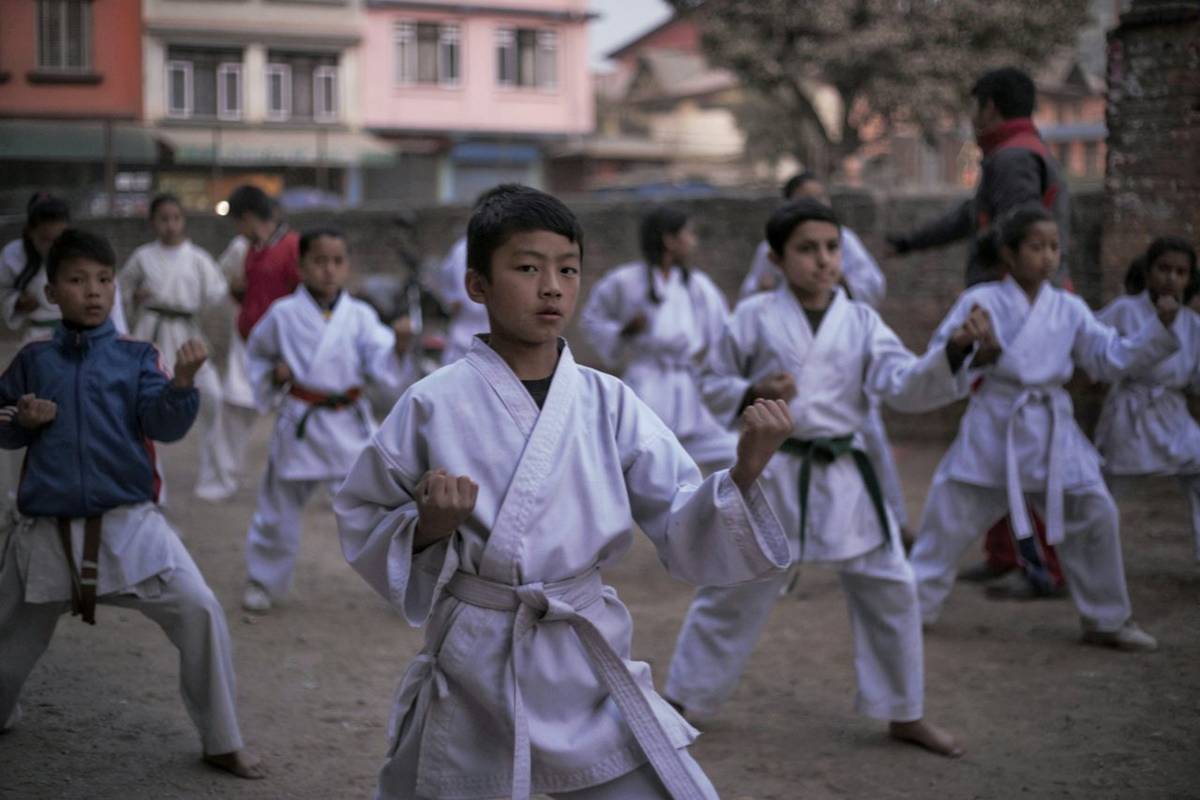
Inside a class
What a class looks like
A typical 45 to 60 minute kids class, minute by minute.
- 10 minBow in and warm upSeiza, a short meditation and stretching
- 15 minKihon (basics)Stances, punches, blocks and kicks in lines
- 15 minKataThe traditional forms for each belt
- 15 minPartner workPre-arranged drills and light point sparring (kumite)
- 5 minBow outThe dojo creed or a word from the sensei
About 60 minutes in all.
Ranks and progress
Colors and their order differ between styles and schools. This is one of the most common sequences.
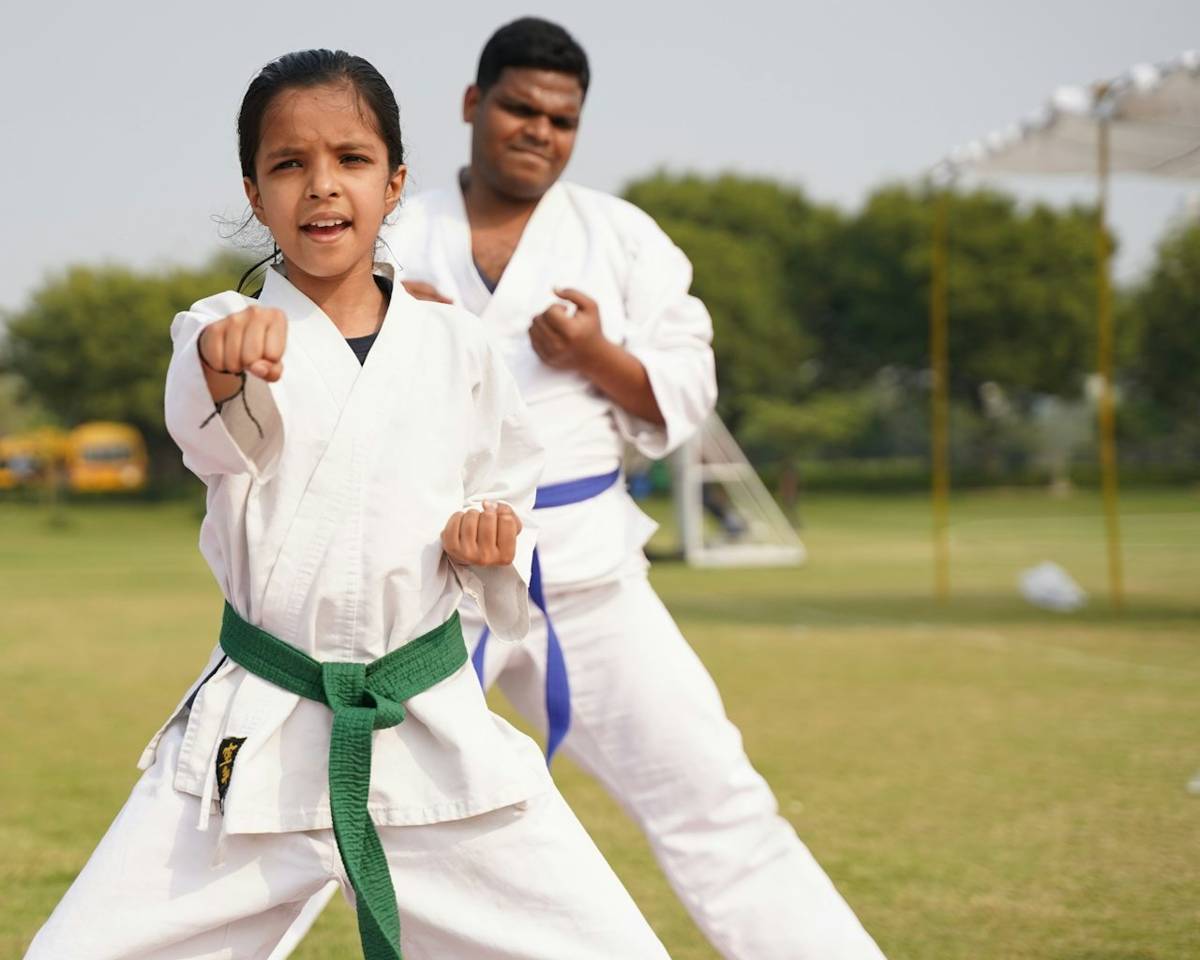
In pictures
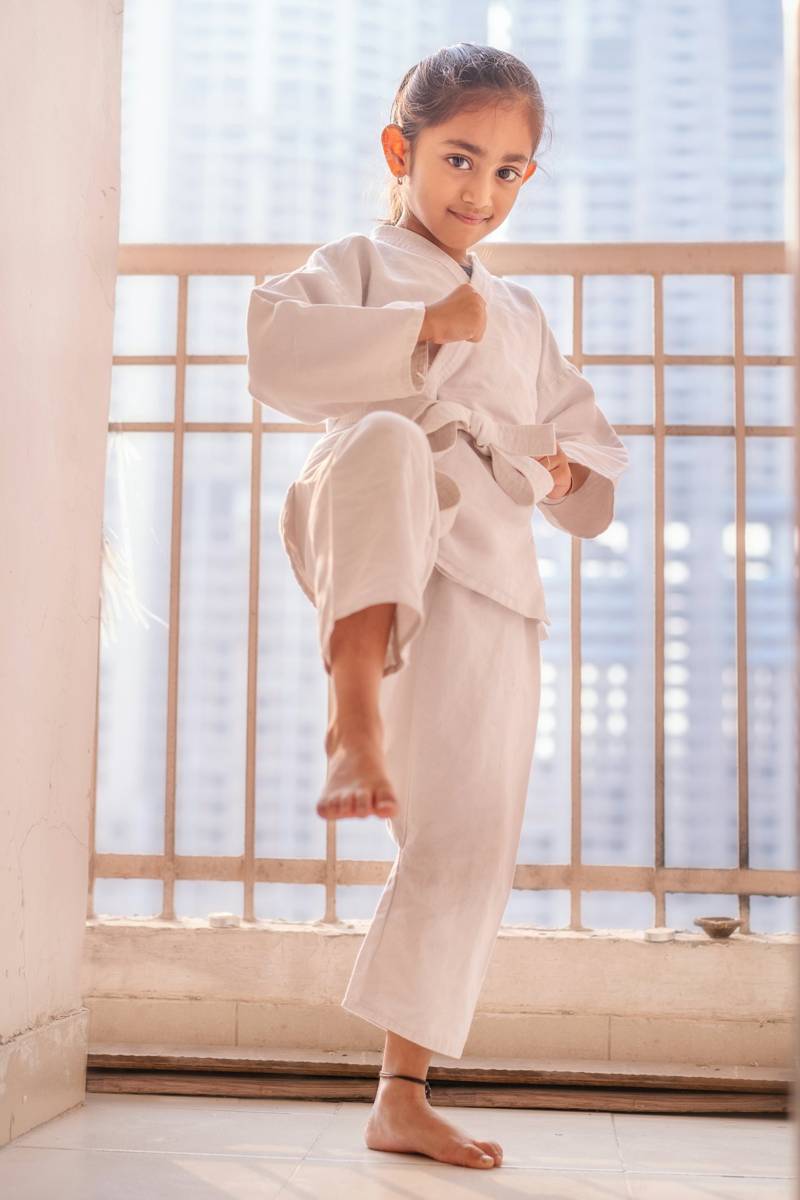
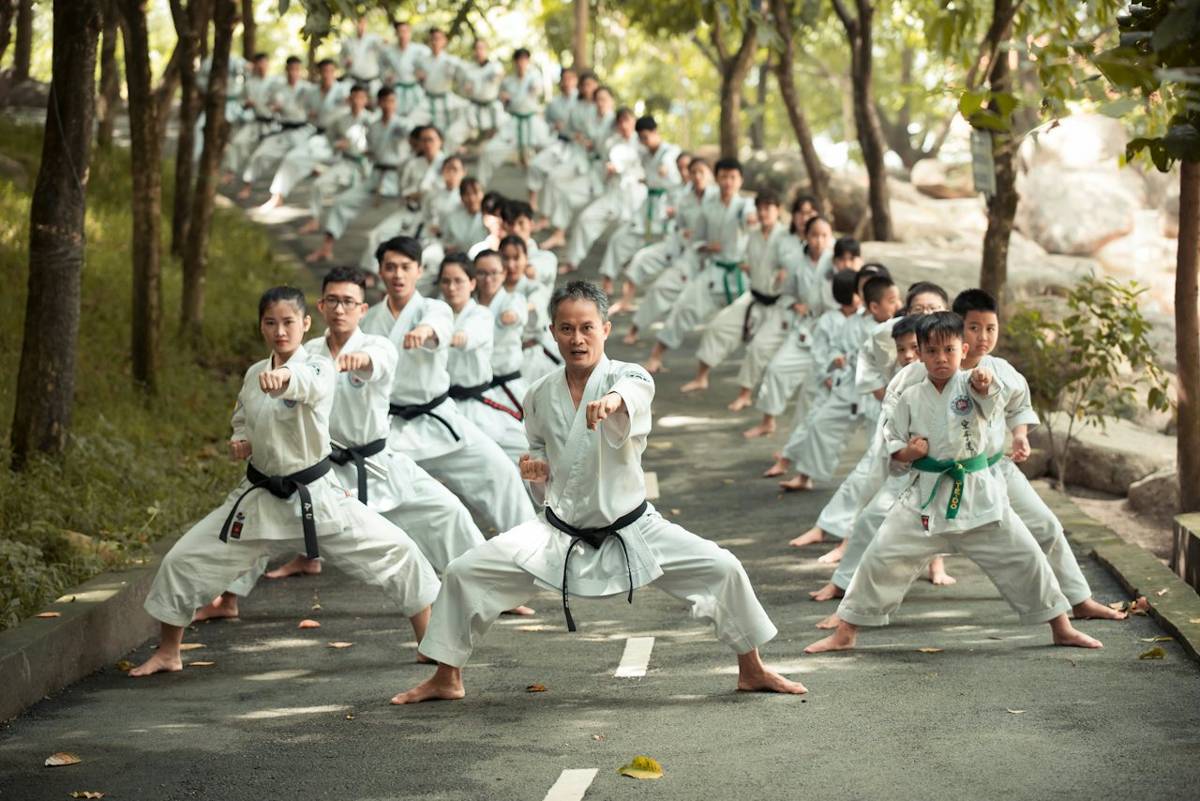
A great fit for
- Children who like calm, orderly classes
- Kids who enjoy perfecting a technique
- Families who value tradition and etiquette
Think twice if
- Your child wants lots of live sparring
- You want grappling self-defense
- The school cannot name its style or lineage
Month by month
The first year of Karate
What a child training about twice a week usually learns. Every school sets its own pace.
- Weeks 1 to 4Bowing, stances and basic strikes
Front stance, straight punches, simple blocks and a front kick, plus dojo etiquette and counting in Japanese.
- Months 2 to 4First kata and first test
The first beginner kata of the school's style and a first belt or stripe test.
- Months 5 to 8More kicks and combinations
Side and roundhouse kicks, punch-kick combinations and partner drills with pads.
- Months 9 to 12Point sparring begins
Light point sparring in mitts and foot pads at many schools, and a second or third belt.
Safety and contact
Sparring
Usually a few belts in, as light point sparring that stops after each score.
Head contact
Light, controlled contact or none for children at most schools; full-contact styles like Kyokushin differ.
Common injuries
Jammed fingers and toes, bruises and the occasional sprain.
Ask the school: Ask which karate style the school teaches and what sparring rules children follow.
What it costs
Typical US ranges. Prices vary a lot by city and school.
| Monthly tuition | $100 to $250 (clubs often less) |
|---|---|
| Belt tests | $30 to $100 each |
| Gi (uniform) | $30 to $80 |
| Sparring gear | $80 to $150 |
Gear and when you need it
Don't buy everything up front. Most of it waits until later.
| Gi and white belt | From day one |
|---|---|
| Mouthguard | When sparring starts |
| Mitts and foot pads | When sparring starts |
| Headgear, groin or chest guard | Depends on school and tournaments |
Signs of a good school
- A clear lineage or style the instructor can explain
- Regular sparring once children are ready
- Calm, firm discipline without humiliation
- Written fees, including testing
Red flags
- Forms only, with no live practice at all
- Guaranteed belts on a schedule
- Claims of secret or deadly techniques
- Black belt contracts pushed in the first month
Words you'll hear in class
- Rei
- Bow
- Sensei
- Teacher
- Hajime
- Begin
- Yame
- Stop
- Kata
- Set routine
- Kumite
- Sparring
Myths and facts
MythAll karate is the same.
FactShotokan, Goju-ryu, Kyokushin and others differ a lot in stances, kata and sparring rules.
MythKarate makes kids aggressive.
FactGood dojos teach self-control and respect first; studies of structured martial arts tend to show the opposite.
MythKata are just dancing.
FactKata train balance, precision, memory and focus, and are part of every belt test.
Questions parents ask
What age can kids start karate?
Many schools take children from 4, with preschool classes from 3. Traditional dojos may prefer 6 or 7.
How long does a karate black belt take?
Many schools award a junior black belt after roughly three to five years of steady training.
Is karate good for self-defense?
It can be, depending on how much realistic sparring the school does. For children, confidence and awareness matter most.
Which karate style is best for kids?
The school matters more than the style. Shotokan is the most common in the US.
Find a Karate class near you
Search by ZIP code, see what's close, and use our checklist when you visit.
Find a classStart reading
Our guides to Karate, written for parents.
KarateKarate for kids: styles, belts, kata and what classes are likeA parent's guide to karate for children: the main styles from Shotokan to Kyokushin, the belt system, kata and sparring, starting age, costs, benefits and how to choose a good dojo.KarateKarate styles explained for parents: Shotokan, Goju-ryu, Kyokushin and moreThe main karate styles a parent will find in the US, what makes each one different, which suit young children, and what it means when a school says it teaches 'karate' without naming a style.KarateKarate belts and kata for kids: the belt order, what each test asks and how long it takesHow the karate belt system works for children: kyu and dan ranks, a common belt order, the kata learned at each stage in Shotokan, Goju-ryu and other styles, junior black belts and realistic timelines.KarateBeginner karate kata: the first forms children learn in each styleWhich kata do children learn first in karate? The beginner forms in Shotokan, Goju-ryu, Shito-ryu, Wado-ryu and Kyokushin, why Heian and Pinan names are swapped, what kata teach and how to help at home.KarateKarate sparring rules for kids: point fighting, contact and safety gearHow karate sparring (kumite) works for children: WKF point scoring, how much contact is allowed, Kyokushin knockdown rules, open tournament point fighting, the gear kids wear and the age sparring usually starts.Karate practicalYour child's first karate class: what happens and how to prepareWhat to expect at a child's first karate class: arriving and bowing in, warm-ups, basics, kata and games, what to wear and bring, dojo etiquette for kids and parents, and how to help a nervous child.Karate practicalKarate words for kids and parents: Japanese terms, commands and countingThe Japanese words children hear in karate class, explained for parents: greetings and commands, counting to ten, names for stances, punches, kicks and blocks, and what sensei, dojo, kata and kiai mean.Karate practicalHow much does karate cost for kids? Tuition, testing, uniforms and gearWhat parents typically pay for children's karate in the US: monthly tuition at commercial dojos and community clubs, sign-up and belt testing fees, uniforms, sparring gear, tournaments and how to keep costs down.Karate practicalKarate gear for kids: what your child needs and whenA parent's guide to karate equipment: the gi and belt, sparring gear such as gloves, foot pads, mouthguard and headgear, groin and chest protection, bags and what you can skip, with tips on sizing and buying.Karate practicalKarate home practice for kids: a simple 15-minute routineHow children can practise karate at home safely: a 15-minute routine with warm-up, stances, basics, kata and stretching, how parents can help, space and safety tips, and getting ready for a belt test.How it compares
Side-by-side guides for parents weighing Karate against other styles.
Style vs styleKarate vs Taekwondo for kids: the real differences, explained for parentsKarate or Taekwondo for your child? How the two styles differ in kicks and punches, forms, sparring, belts, competition, cost and class culture, and which kind of child each one suits.Style vs styleKarate vs BJJ for kids: tradition and striking or modern grappling?Karate and Brazilian Jiu-Jitsu compared for children: what each teaches, self-defense value, discipline, safety, belts, cost and how to choose.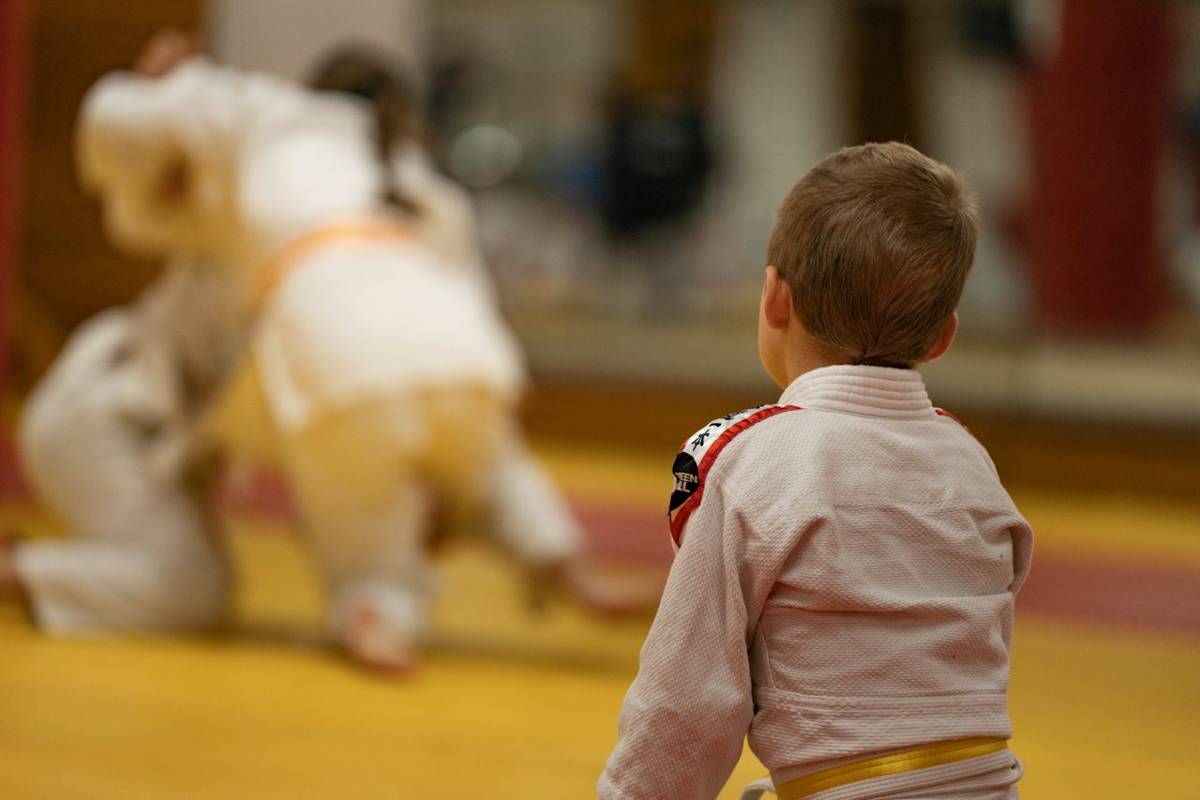 Style vs styleKarate vs judo for kids: striking or throwing, compared for parentsKarate or judo for your child? How a striking art and a throwing art differ in what children learn, live practice, falling, belts, competition, safety, cost and which kind of child each one suits.
 Style vs styleKarate vs kung fu for kids: what is the difference?Karate or kung fu for your child? How the Japanese and Chinese martial arts differ in movement, stances, forms, sparring, ranks, culture, cost and which kind of child each one suits.
 Style vs styleKarate vs Krav Maga for kids: traditional art or self-defense system?Karate or Krav Maga for your child? How a traditional martial art and a modern self-defense system differ for children: what is taught, structure, belts, sparring, safety, cost and which child each suits.Choosing a styleBest martial art for kids: an honest comparison for parentsTaekwondo, karate, Brazilian Jiu-Jitsu, judo, kung fu, wrestling and kickboxing compared for children: what each one teaches, starting ages, costs, safety and which kind of child each style suits.