| What to know | |
|---|---|
| Grouping | By age, weight and often belt or experience |
| Match length | Short, shorter for younger kids |
| Winning | Ippon, or the higher score at the end |
| Banned for young kids | Chokes, armlocks and risky techniques |
| Uniform | Clean, well-fitting judogi; sometimes white and blue |
| Entry | Often requires a national membership |
Pick by goal
- First eventA local club tournamentFriendly and often grouped by experience.
- Nervous childWatch an event firstSeeing matches removes the mystery.
- Near a weight limitGo up a divisionChildren should never cut weight.
- Loves competingRegular local eventsExperience matters more than medals.
On this page
Judo is an Olympic sport, and competition is part of its culture. Many clubs encourage children to try a local tournament once they can fall well and are comfortable in randori. A first tournament can be a proud day, and knowing what to expect makes it much easier.
How children are grouped
Children compete in divisions by age and weight, and many local events also group by belt or experience, so beginners face beginners. Some events for the youngest children use pools, where every child gets several matches, rather than knockout brackets. Check how the event works when you register.
Scoring
Matches are short, and shorter for younger age groups. A player wins immediately with ippon: a clean, powerful throw that lands the opponent largely on their back, or a pin held for the required time. Waza-ari, a half point, is awarded for slightly less perfect throws or shorter pins, and two waza-ari make ippon. If time runs out, the player with the higher score wins; small penalties, called shido, can decide close matches. Our guide to judo words explains the calls.
Rules that protect children
Rules for young children are simplified. Chokes and armlocks are not allowed until older age groups, and techniques that risk landing on the head are banned. Referees stop matches quickly if anything looks unsafe. Children who have learned good breakfalls, as our breakfalls guide explains, are well protected.
Weigh-ins, uniforms and memberships
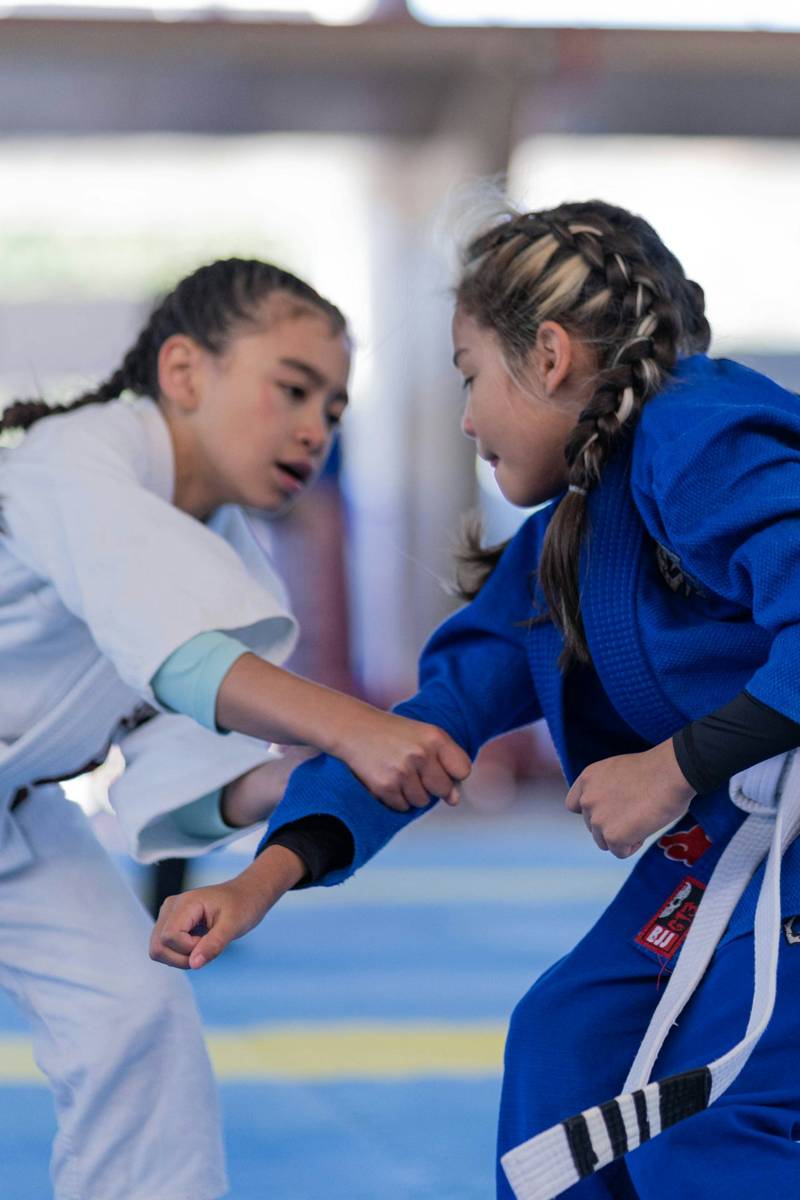
Most events weigh children before the competition, sometimes the day before or on the morning. Weigh your child at home first; children should never cut weight, and if they are near a limit, they should enter the next division up. Judogi must be clean, fit properly and meet the event’s rules, and some events require a white and a blue gi or colored belts to tell players apart. Most sanctioned tournaments also require a current national membership.
Costs
Entry fees for local judo tournaments are often modest compared with some other martial arts, but add membership, travel and food. Our cost calculator includes a line for events.
On the day
Arrive early for check-in, find your child’s mat, and bring water, snacks, flip-flops for walking off the mat and something to pass the time. Let the coach do the coaching from the chair. Cheer positively and praise effort, courage and sportsmanship whatever the result. Bowing to the opponent and referee before and after every match is part of judo, and children take pride in doing it well.
Is your child ready?
Children usually compete once they have trained for a few months, can fall confidently and enjoy randori. Ask the coach. For general tips, see our guide to kids martial arts tournaments.
Questions parents and students ask
Can young children do judo competitions?
Yes. Many local tournaments have divisions from about age 5 or 6, with simplified rules and short matches. Some events for the youngest children are run more like festivals, with every child taking part.
Are chokes and armlocks allowed in kids judo?
Not for young children. Chokes and armlocks are introduced only for older age groups under strict rules. Check the rules of the event, as they vary by organization and age.
Do kids need a membership to compete in judo?
Usually. Most sanctioned tournaments require a current membership with a national judo organization, which many clubs ask members to hold anyway.