On this page
Walk past any Taekwondo school in the early evening and you’ll see a room full of children. Come back at eight o’clock and you may find a different class: accountants, nurses, parents who started after watching their kids, and retirees who always wanted to try. Adult beginners are more common than they look from the outside, and age matters much less than most people fear.
Is it too late?
It isn’t. Starting at 30, 40 or 50 means you won’t be competing at the Olympics, but almost nothing else is out of reach. Adults earn black belts every year after starting in middle age, and many continue to higher degrees. Taekwondo’s forms, which make up a large part of every test, reward patience and memory, two things adults usually have in better supply than eight-year-olds.
What does change with age is recovery. Muscles take longer to bounce back after a hard class, and tendons that haven’t been stretched in decades need time. That isn’t a reason not to start, but it is a reason to start sensibly.
Finding the right class
Ask any school you’re considering whether it runs an adult class or a family class. Training next to children can work at a small school, but most adults are happier with peers, where the pace allows for questions and the warm-up suits grown-up joints. A good adult class also gives you more say in sparring: many adults train for fitness and forms and only spar lightly, while others love it.
Watch a class before you sign up. You want an instructor who modifies kicks for different flexibility levels, and students who look like they’re enjoying themselves rather than surviving.
Flexibility: start low, rise slowly
The biggest early frustration for adults is kicking height. Children kick at head height without thinking; adults often struggle to reach the waist. The answer is patience. Kick at the height that feels comfortable, with good form, and let the height rise over months. A clean front kick to the stomach is worth more than a strained one to the chin.
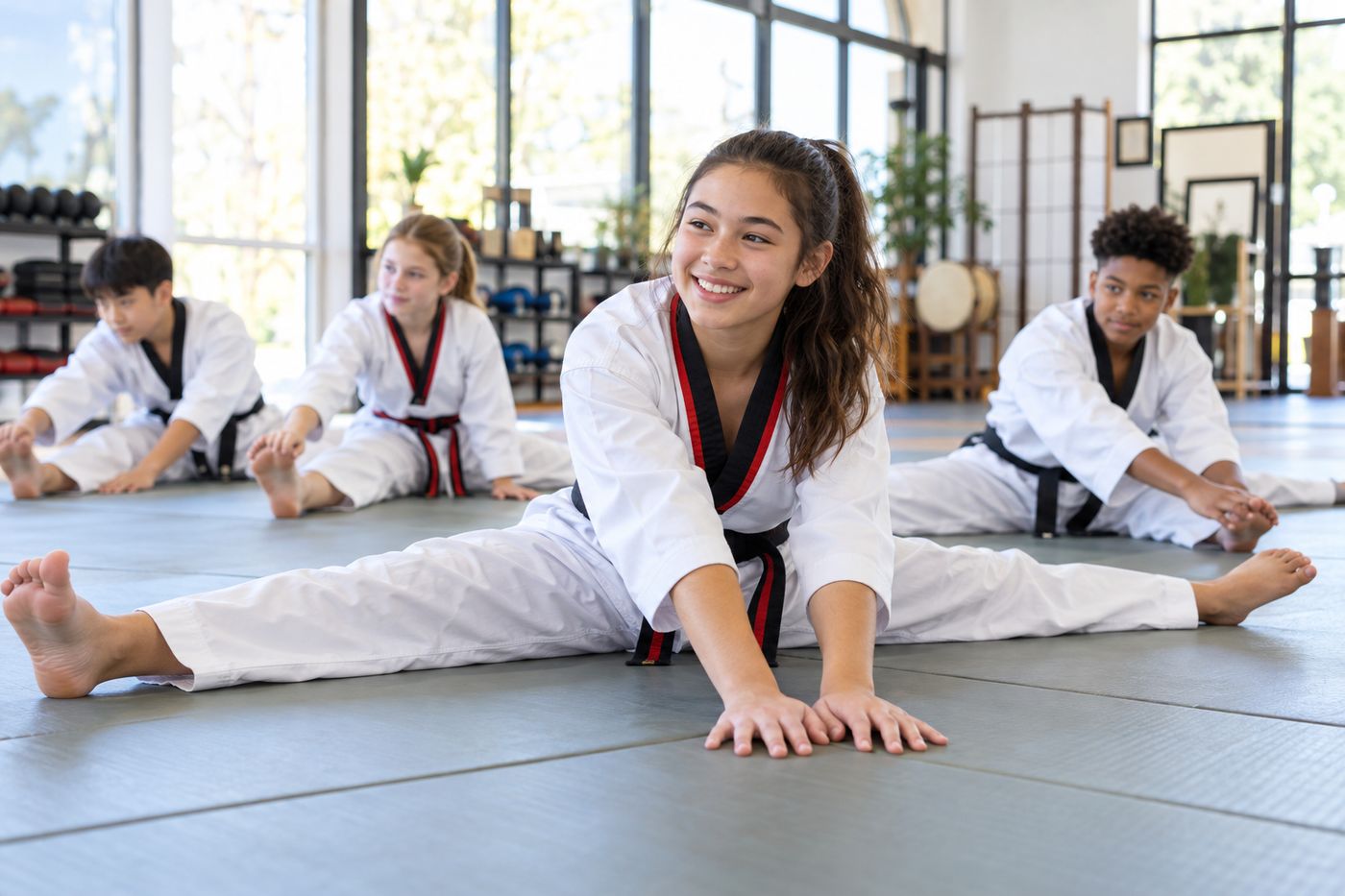
Short daily stretching makes a big difference. Ten minutes after a warm shower, focusing on hamstrings, hip flexors and inner thighs, will do more than one long session a week. Never bounce into a stretch, and never push into sharp pain. Dynamic leg swings as a warm-up before class prepare the hips for kicking without the risk of static stretching on cold muscles.
Avoiding injury
Most adult injuries in Taekwondo come from doing too much too soon: a pulled hamstring from a high kick before warming up, a sore knee from pivoting on a grippy mat, or a sprained toe in sparring. Some simple habits prevent most of them. Arrive early and warm up properly. Learn to pivot on the ball of the supporting foot when you kick, which protects the knee. Take a day off between hard classes in the first few months. And tell your instructor about any old injuries, so they can suggest alternatives.
If you have a heart condition, high blood pressure, joint problems or haven’t exercised in years, check with your doctor before starting.
How fast adults progress
Adults usually move through the early belts at the same pace as children, two to four months per belt. Forms tend to come faster for adults, because they can study them at home and remember long sequences, while kicks and sparring come slower. Most adults who train two or three times a week reach black belt in three to five years. Our guide to how long a black belt takes has the details.
Practicing at home
Home practice is the adult’s secret weapon. A few minutes on your form most days, using our step-by-step Taegeuk guides, will make class time far more useful. Learn the Korean terms too: when you understand ap chagi and dollyeo chagi without translating, you can follow the instructor’s commands without the half-second delay that leaves beginners a step behind. Our Korean terms list has audio for every word.
Keeping going
Every adult beginner hits a point, usually around green belt, where the novelty is gone and the goal still feels far away. The students who keep going tend to have a reason that goes beyond the belt: the fitness, the friends in class, or the quiet focus of an hour where work and phones disappear. Write down why you started and look at it when the motivation dips. The black belt will take care of itself if you keep showing up.
Questions parents and students ask
Is 40 too old to start Taekwondo?
No. Many people start in their forties and fifties and earn black belts. Progress depends far more on regular training and flexibility work than on age.
Can adults train in the same class as kids?
Some small schools combine them, but an adult or family class is usually a better experience. Ask the school whether it has a dedicated adult time.
How flexible do you need to be to start Taekwondo?
Not at all. Flexibility is something Taekwondo builds. Kick at a height that feels comfortable and let it rise over months.