On this page
The students who move up fastest in Taekwondo are rarely the most athletic ones. They are the ones who practise a little at home between classes. Twenty minutes a few times a week is enough to make forms automatic, stances stronger and kicks higher, and it takes the pressure off the week before a belt test. This routine works for children from about six and for adults, with tips for adapting it to younger kids.
Before you start
Clear a space of about two meters in each direction, move anything breakable, and practise on carpet or a mat rather than a hard floor. Bare feet are best for grip and balance, or socks with grips. Keep a glass of water nearby. For young children, it helps to make practice a regular part of the day, like after school snack, rather than a negotiation each time.
The 20-minute routine
1. Warm-up, 3 minutes. Jog on the spot, do jumping jacks and arm circles, then ten leg swings forward and to the side on each leg. The goal is to feel warm before kicking.
2. Stances, 3 minutes. Step into a front stance, back stance and horse-riding stance, holding each for 20 seconds on each side. Check in a mirror: front knee over the toes in front stance, weight on the back leg in back stance, knees pushed out in horse stance. Strong stances make every form look better.
3. Basics, 3 minutes. In front stance, do ten low blocks, ten middle punches and ten high blocks, stepping forward and back. Count out loud in Korean, hana, dul, set. Our counting guide has the pronunciation.
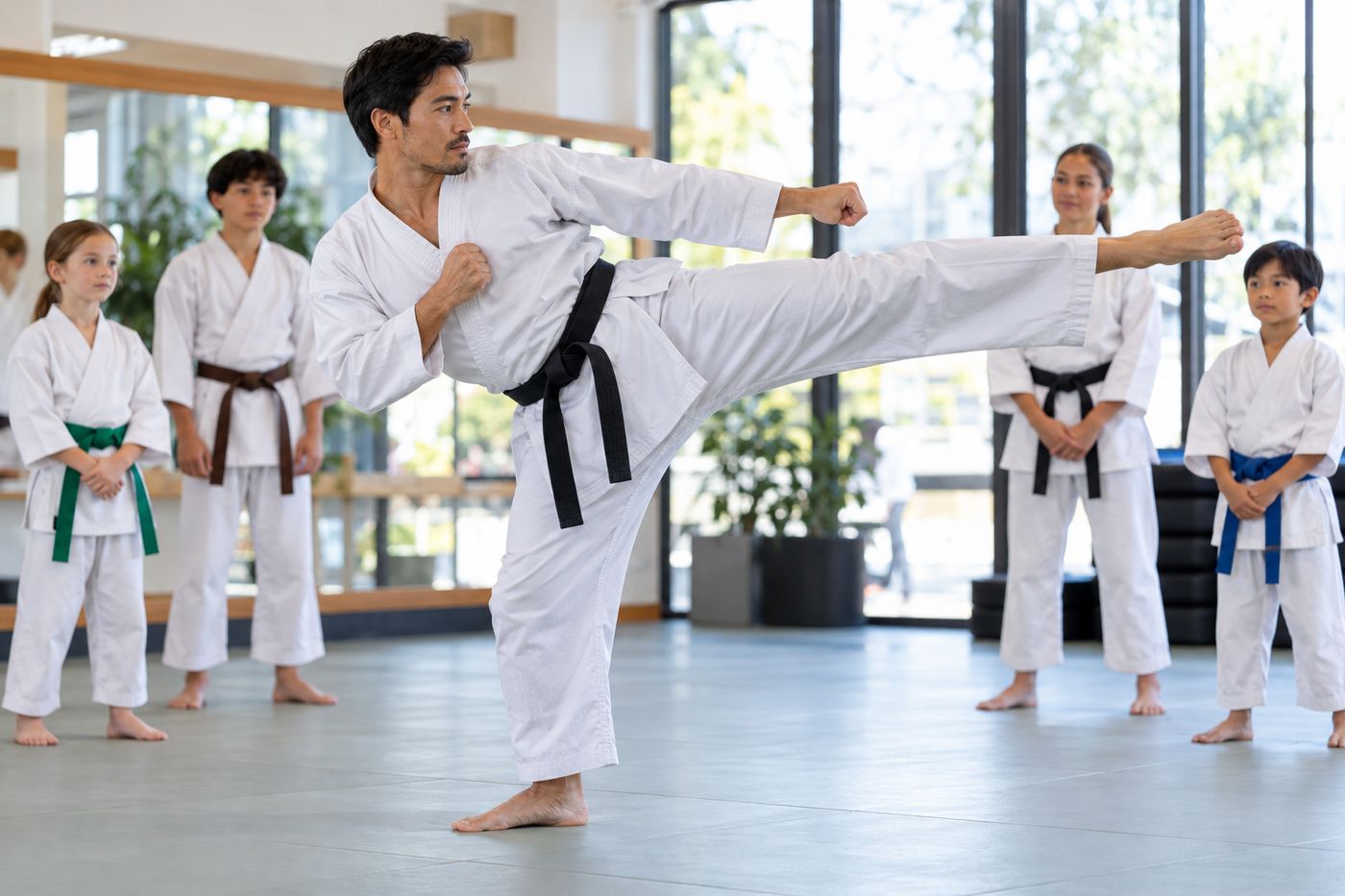
4. Kicks, 4 minutes. Ten slow front kicks, roundhouse kicks and side kicks on each leg, holding the extended position for a second. Slow kicks build balance and height faster than fast ones. Add any kick your instructor is working on. The kicks guide has step-by-step help for each one.
5. Forms, 5 minutes. Run your current form three times: once slowly, checking every stance, once at normal speed, and once with full power and a strong gihap. Then run the previous form once. If you are unsure of a move, use the step-by-step guide on this site, starting with Taegeuk Il Jang.
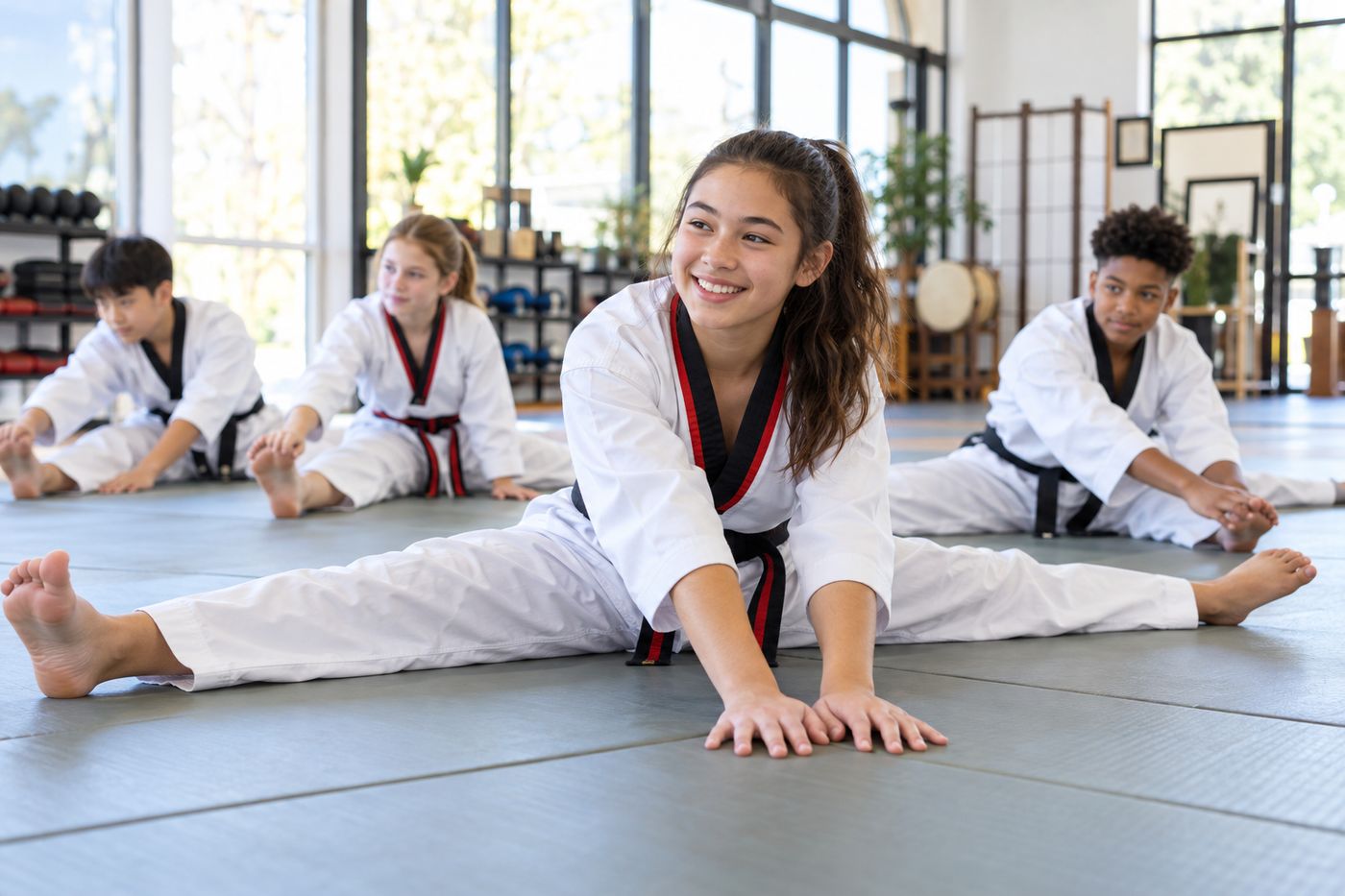
6. Stretch, 2 minutes. Finish with a seated hamstring stretch, a butterfly stretch and a low lunge on each side, holding each for 30 seconds. Stretching when warm is when flexibility improves most. See how to kick higher for a fuller plan.
Adapting it for young children
Children under about seven do better with shorter sessions and games. Cut the routine to ten minutes and turn parts into play. Freeze tag in a front stance, kicking a balloon kept in the air, or “Simon says” with Korean commands like charyeot (attention) and junbi (ready) all build the same skills. Praise effort and focus more than technique. The instructor will refine the details in class.
Getting the most from practice
Ask your instructor what to work on at home. Most are delighted to be asked and will point to the one or two things that matter most for the next test. Filming a form on a phone and watching it back is one of the fastest ways to spot mistakes. And keep practice positive. A child who looks forward to ten minutes of kicks will progress faster than one who dreads an hour of drills.
Safety at home
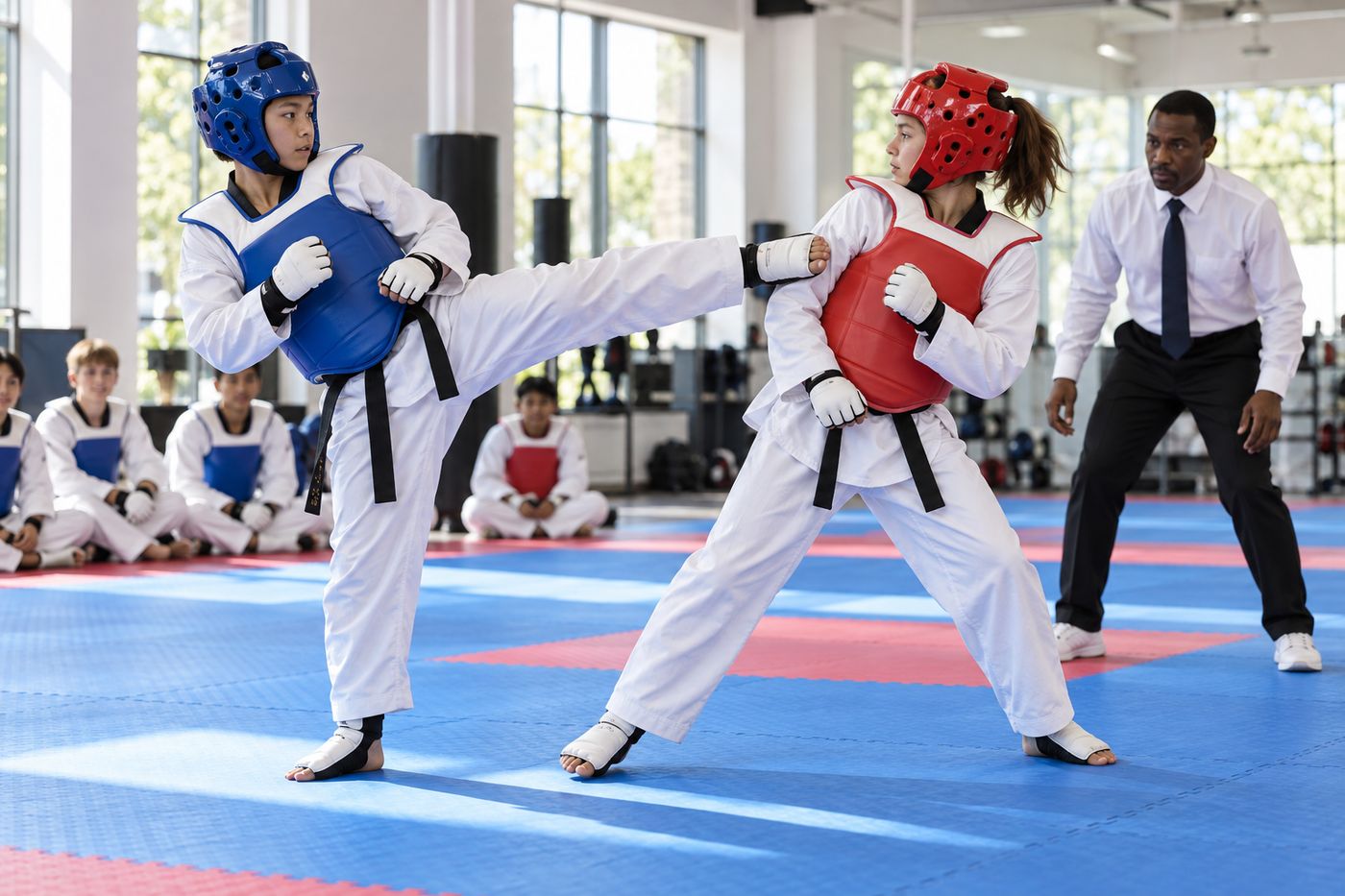
Avoid jumping and spinning kicks without mats and an instructor. Never practise sparring with siblings without supervision and gear. Stop if anything hurts, especially knees or ankles, and mention it to the instructor. Board breaking is for the dojang only.
For what to expect at the next belt test, see our belt test guide, and for what each belt involves, start from the belt order guide.
Questions parents and students ask
How often should my child practise Taekwondo at home?
Ten to twenty minutes three or four days a week is plenty for most children. Short, regular practice helps far more than one long session before a belt test.
Can you learn Taekwondo at home?
You can practise and improve at home, but it is hard to learn correctly without an instructor. Home practice works best alongside regular classes, where an instructor can catch mistakes before they become habits.
How much space do I need?
About two meters (six to seven feet) of clear floor in each direction is enough for stances, slow kicks and most forms practised in sections. Move furniture away and avoid hard floors for any jumping.