On this page
Every black belt in the world started in a plain white belt, usually standing in the back row, unsure which foot goes forward. The white belt is the shortest stage of Taekwondo, often only two or three months, but it sets habits that last for years: how to bow, how to listen, how to stand still and how to try something new in front of other people. This page covers what the white belt means, what instructors expect from a white belt student, what they learn and what the first test usually looks like.
What the white belt symbolizes
White stands for innocence and a clean start. The traditional explanation, used in almost every dojang, is that a white belt student is like a seed that has not been planted yet: full of potential, with no roots so far. Nothing is expected to be good. Everything is expected to be new.
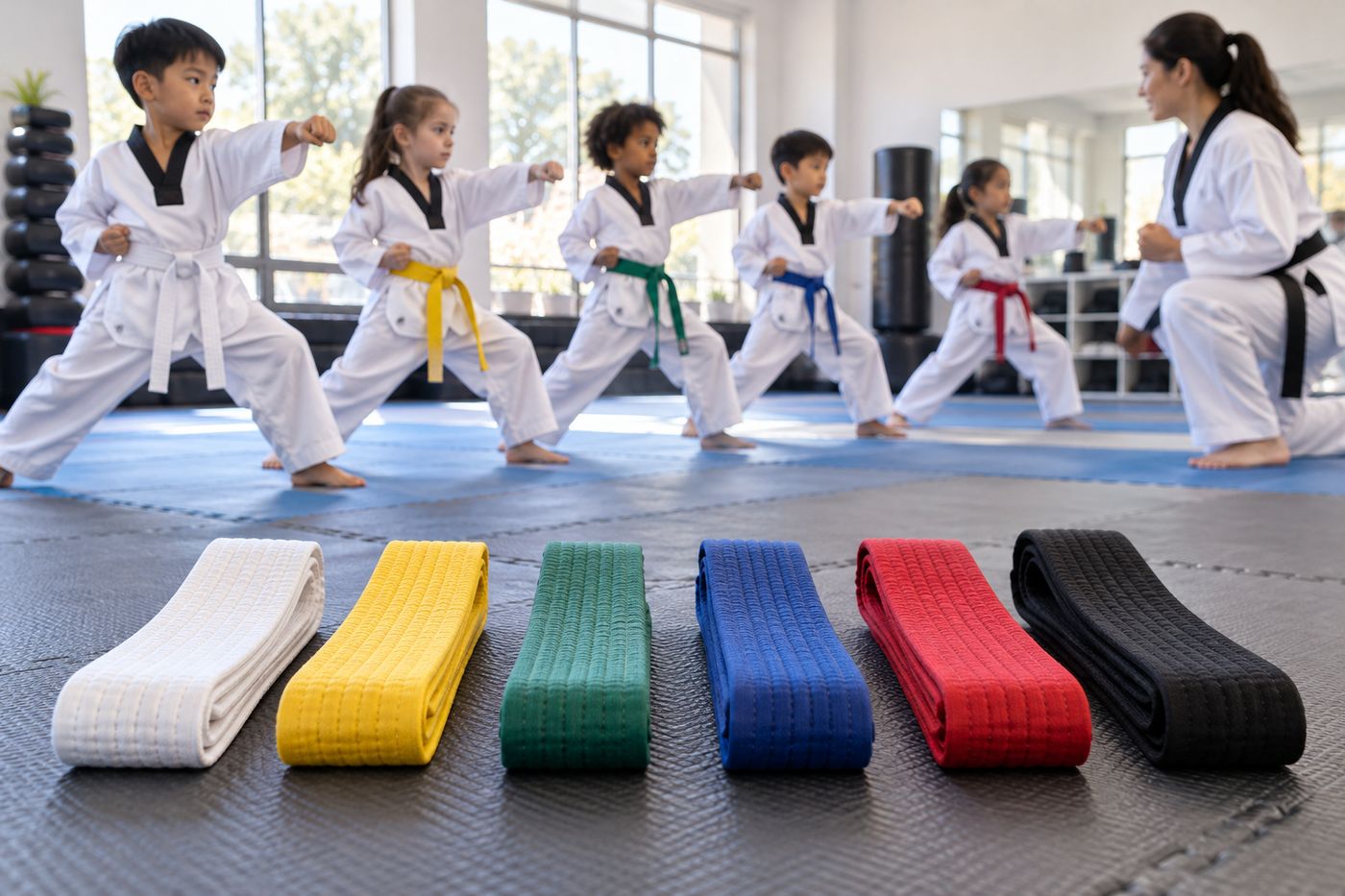
It is also the starting point of a story the belts tell together. Each color after white is a stage of growth, from yellow earth to green sprout to blue sky and red caution, and black, the final color, is often described as the opposite of white. Instructors like to say that when a black belt ties on their belt, it carries all the colors that came before it, beginning with this one.
The attitude instructors look for
Nobody expects a white belt to kick well. What instructors look for in the first weeks is attitude, and they are fairly consistent about what that means.
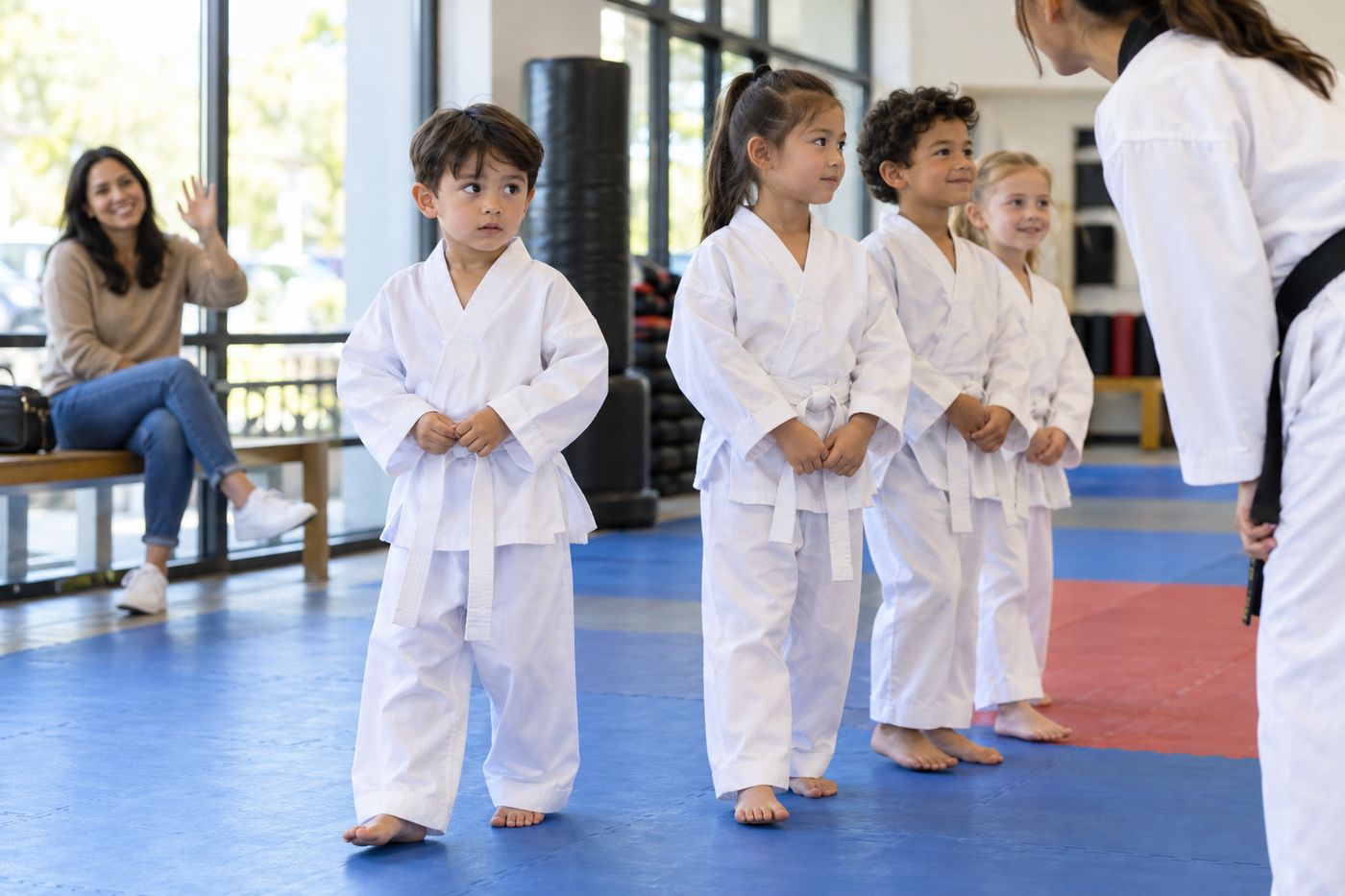
The first thing is listening. A white belt learns that when the instructor speaks, the class goes quiet and still. The commands charyeot (attention) and junbi (ready) are among the first Korean words a student hears, and responding to them quickly is half of white belt. The second is respect, shown through the bow, gyeongnye, when entering and leaving the training floor and when greeting the instructor. The third is effort: trying every drill even when it feels awkward, and not giving up the first time a kick goes wrong. For young children the bar is gentle, and instructors are mostly watching whether a child can follow along and keep trying. For adults, it is the same lesson in a different form: leaving pride at the door and being willing to look like a beginner.
What a white belt learns
White belt training covers the building blocks that every later belt uses. The order varies by school, but most of the following is taught in the first two or three months:
Etiquette and commands. Bowing in and out, lining up by rank, addressing the instructor as sir, ma’am or sabeomnim, and responding to attention, ready, begin (sijak) and return (baro).
Stances. The ready stance, the short walking stance (apseogi) and the long front stance (apkubi). Learning to keep the back heel down and the front knee over the toes is the main physical skill of white belt.
Blocks and punches. The low block (arae makgi), the middle punch (momtong jireugi) and, in many schools, the high block (eolgul makgi). Students learn to chamber the hand at the hip and twist the fist at the end of a punch.
Kicks. The front kick (ap chagi) comes first, often followed by a basic roundhouse. White belts learn to chamber the knee and pull the foot back after kicking.
Korean counting. Counting to ten, hana to yeol, which the class shouts during drills. See our guide to counting in Korean for Taekwondo for the pronunciation.
The first form. Many schools teach Taegeuk Il Jang during white belt and test it for yellow. Others start with short basic drills and teach the first form at yellow.
What is on the white belt test
The first belt test is usually short and friendly, and passing is expected for any student who has been coming to class. A typical test for yellow belt includes a demonstration of bowing, attention and ready stances; counting to ten in Korean; a line drill of front stance with low block and middle punch; front kicks across the floor; and either a basic drill or Taegeuk Il Jang. Some schools add a simple board break with a palm strike or front kick, mostly to give children a memorable moment.
Instructors are watching for clean stances, loud and confident counting, and good manners. Perfect technique is not the standard. A child who bows properly, stays focused and finishes the form without stopping is doing exactly what a white belt should. For what test day looks like and how to help a nervous child, see our guide to the Taekwondo belt test.
How long it usually takes
Most students move from white to yellow in two to three months, training two or three times a week. Schools that run stripes often give three or four during this time, one for each piece of the test. Some programs for four- to six-year-olds stretch white belt a little longer and break it into smaller stages so the steps feel achievable.
Tips for parents and new students
For parents, the most useful thing in the first month is consistency. Children who attend regularly for the first eight weeks almost always settle in, while those who skip classes tend to feel lost and want to quit. Practising the Korean counting in the car, or asking your child to show you a low block at home, makes a surprising difference. Our guide to the first month of Taekwondo covers what to expect week by week.
For adults starting out, the white belt is a chance to learn the basics properly rather than rush them. Stances that feel too low and blocks that feel too slow are exactly what later belts are built on. Our guide to starting Taekwondo as an adult covers the rest.
When the white belt is done, the next stop is the yellow belt. For the full ladder from here to 9th dan, see Taekwondo ranks explained.
Questions parents and students ask
How long does a white belt take in Taekwondo?
Most students test out of white belt after two to three months of training two or three times a week. Some schools hold a first test as early as six weeks, especially for young children.
What do you need to know to pass the white belt test?
Usually: how to bow and stand at attention and ready, counting to ten in Korean, front and walking stances, low block, middle punch, high block, front kick, and either basic drills or the first form, Taegeuk Il Jang. Many schools also check etiquette and attendance.
What does the white belt symbolize?
Innocence and a fresh start. The student has no knowledge of Taekwondo yet, like a blank page or a seed that has not been planted. Black, the last color, is often described as white's opposite.