| Capoeira for kids | |
|---|---|
| Starting age | About 4 or 5 |
| Contact | Light and playful for children |
| Music | Instruments and singing every class |
| Ranks | Colored cords, differ by group |
| Typical cost | Often modest; yearly batizado fee |
Pick by goal
- Musical, creative childCapoeiraRhythm, song and movement in every class.
- Gymnastics loverCapoeiraCartwheels, handstands and flips.
- Practical self-defenseKrav Maga, BJJ or judoCapoeira is more art and game.
On this page
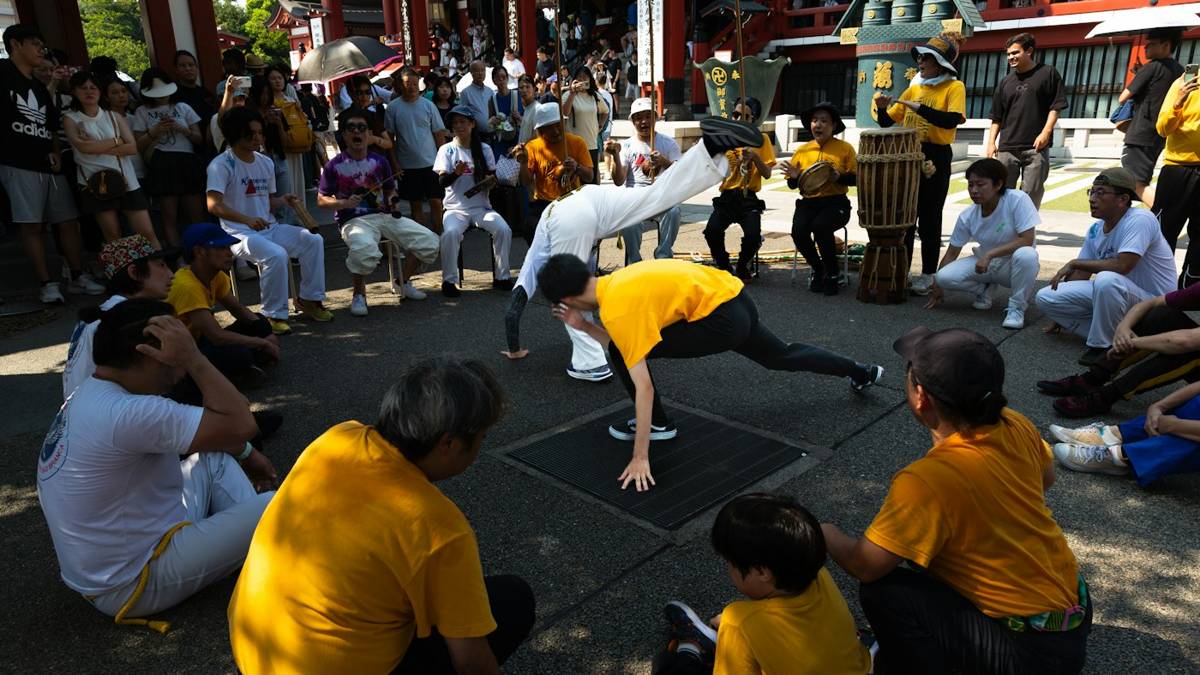
Walk past a capoeira class and you will hear it before you see it: drums, clapping, singing and the twang of the berimbau, a one-stringed musical bow. Inside, students take turns in pairs in the middle of a circle, cartwheeling, kicking and ducking in a flowing game. Capoeira is a martial art, a dance, an acrobatic sport and a musical tradition all at once, and children often fall in love with it.
Where capoeira comes from
Capoeira developed in Brazil among enslaved Africans and their descendants, blending African movement and music traditions into a fighting art disguised as dance. It was once banned in Brazil and later became a national symbol. In 2014, UNESCO added the capoeira circle to its list of the Intangible Cultural Heritage of Humanity. Today, the two main traditions are Capoeira Angola, slower, lower and closer to the ground, and Capoeira Regional, faster and more athletic, with many groups mixing both.
The roda and the game
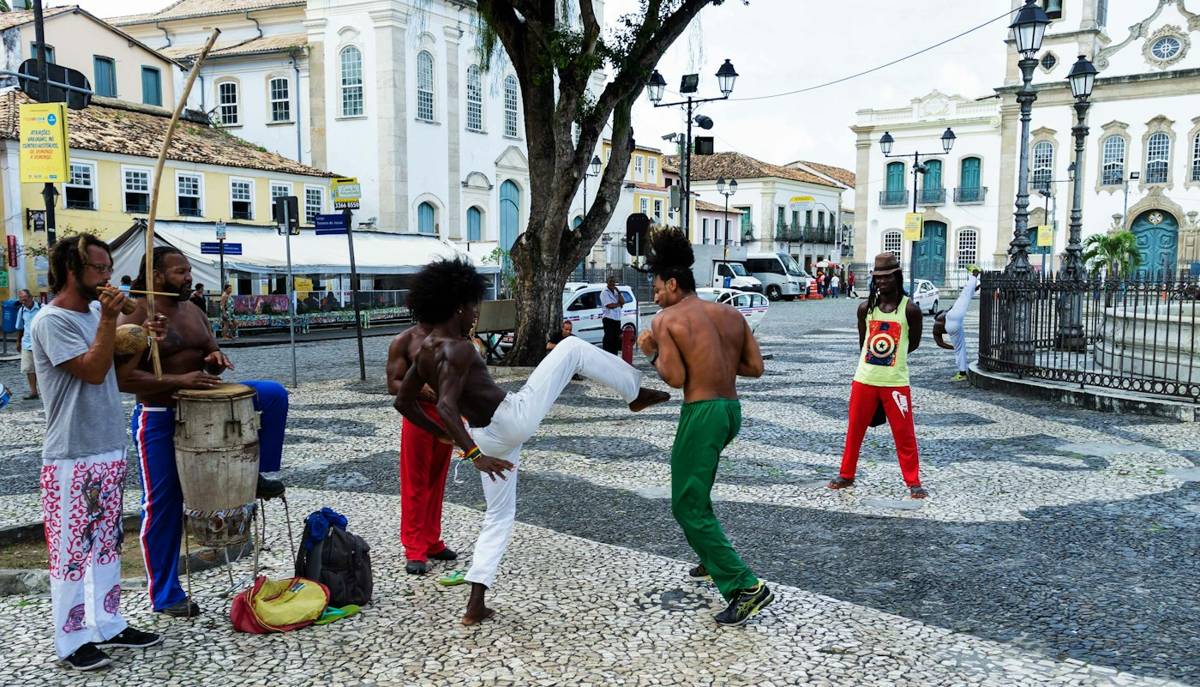
Capoeira is played in a roda, a circle of people who clap and sing while musicians play. Two players enter the circle and “play” a game (jogo), using the basic rocking step called the ginga, kicks, sweeps, escapes and acrobatic moves. Players aim to outwit each other rather than land hard blows, and kicks are usually controlled near-misses. The music sets the speed and style of each game.
What kids’ classes look like
Children’s classes usually begin with warm-ups and the ginga, then practise kicks, escapes and simple acrobatics such as cartwheels (aú) and handstands. Partners practise sequences of attack and escape, and many classes finish with a roda where children play in pairs while the group sings. Children also learn to play the instruments and sing traditional songs in Portuguese.
Cords and the batizado
Most capoeira groups use colored cords tied around the waist instead of belts. Each group has its own color system, so there is no single order. New students often receive their first cord at a batizado, a festive ceremony and celebration where students play with visiting teachers, often held once a year.
Safety
Capoeira involves little direct contact. The main risks are sprains and wrist strain from acrobatics, so look for teachers who build skills progressively and use mats for flips.
Costs
Classes are usually priced like other martial arts or dance classes. Children need comfortable white trousers (abadá) and a group T-shirt once they continue, and there may be a fee for the batizado.
The music, explained
Music runs every capoeira class, and children often love it most. The berimbau, a single-string instrument shaped like a bow with a gourd, leads the roda and sets the speed and style of the game. The pandeiro, a tambourine, and the atabaque, a tall drum, keep the rhythm, and everyone claps and sings call-and-response songs in Portuguese. Children learn to play each instrument over time and take turns in the bateria, the music section. Singing loudly is part of the practice, so shy children often grow in confidence here. Parents do not need to speak Portuguese; teachers explain what the songs mean. Our capoeira profile has the words you will hear.
Is capoeira right for your child?
Capoeira suits musical, energetic and creative children who love moving and performing, and families who value culture and community. If practical self-defense is your main goal, compare BJJ, judo and wrestling. For a wider comparison, see the best martial art for kids.
For the facts at a glance, a parent scorecard and what a typical class looks like, see our Capoeira profile.
Questions parents and students ask
Is capoeira good for kids?
Capoeira is excellent for flexibility, coordination, rhythm and confidence, and children love the music and acrobatics. It is less focused on direct self-defense than grappling arts.
Does capoeira have belts?
Most groups use colored cords (cordas or cordões) tied around the waist instead of belts. Each group has its own color system, and new students often receive their first cord at a ceremony called a batizado.
Do kids need to speak Portuguese for capoeira?
No. Children pick up the Portuguese songs and words naturally in class, which many families see as a bonus.