| How belts work | Typical gap | |
|---|---|---|
| Taekwondo | Formal test with a fee | 2 to 4 months at lower belts |
| Karate | Formal grading with a fee | 3 to 6 months at lower belts |
| BJJ | Coach promotes in class, stripes between | Often a year or more per color |
| Judo | Grading or coach promotion, sometimes points | Several months to a year |
| Wrestling | No belts; results and levels | None |
Pick by goal
- Child loves milestonesTaekwondo or karateFrequent tests and visible progress.
- Avoid test feesBJJ or judoPromotions are often free.
- Nervous testerOur belt test countdown sheetA plan makes test day calmer.
On this page
For many children, the belt test is the most exciting and nerve-racking day of the martial arts year. But “belt test” means very different things in different styles. Some arts hold formal examinations with a panel of judges; others hand out new belts quietly at the end of a normal class; a few have no belts at all. Knowing what to expect in your child’s style helps you prepare them and keeps the experience positive.
Taekwondo and karate: formal tests
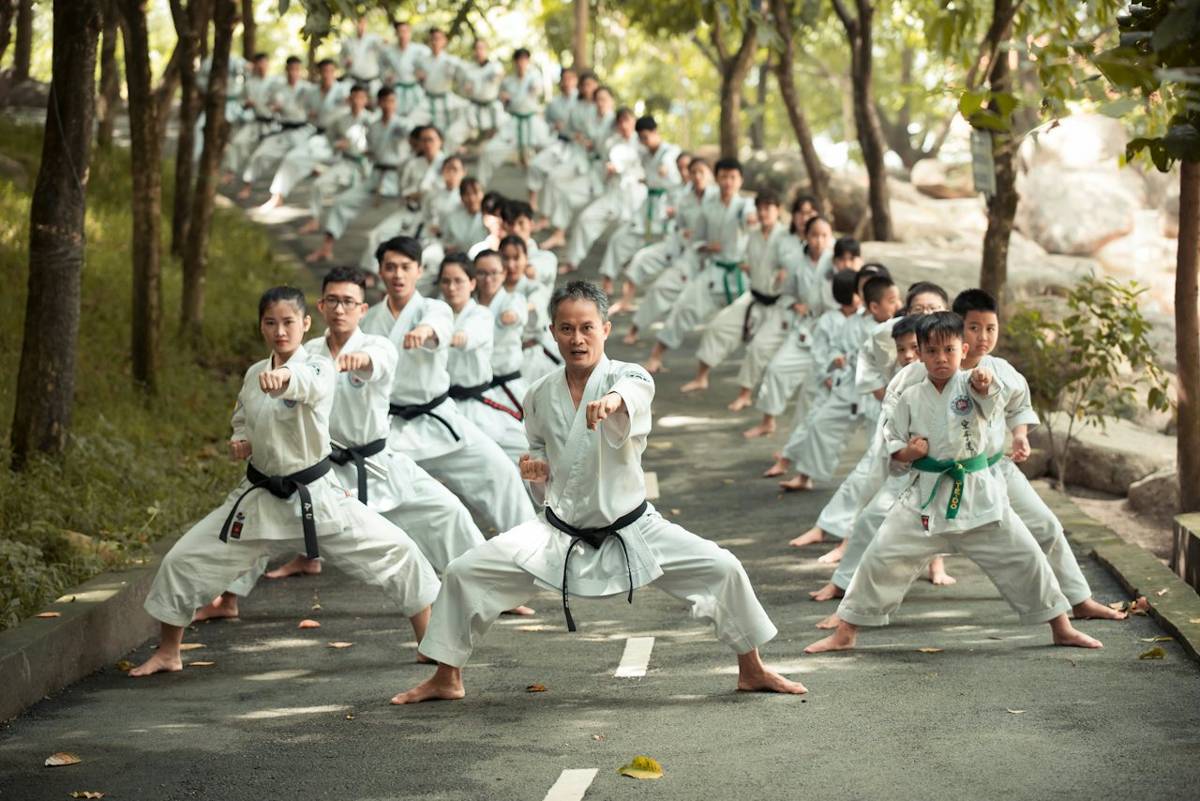
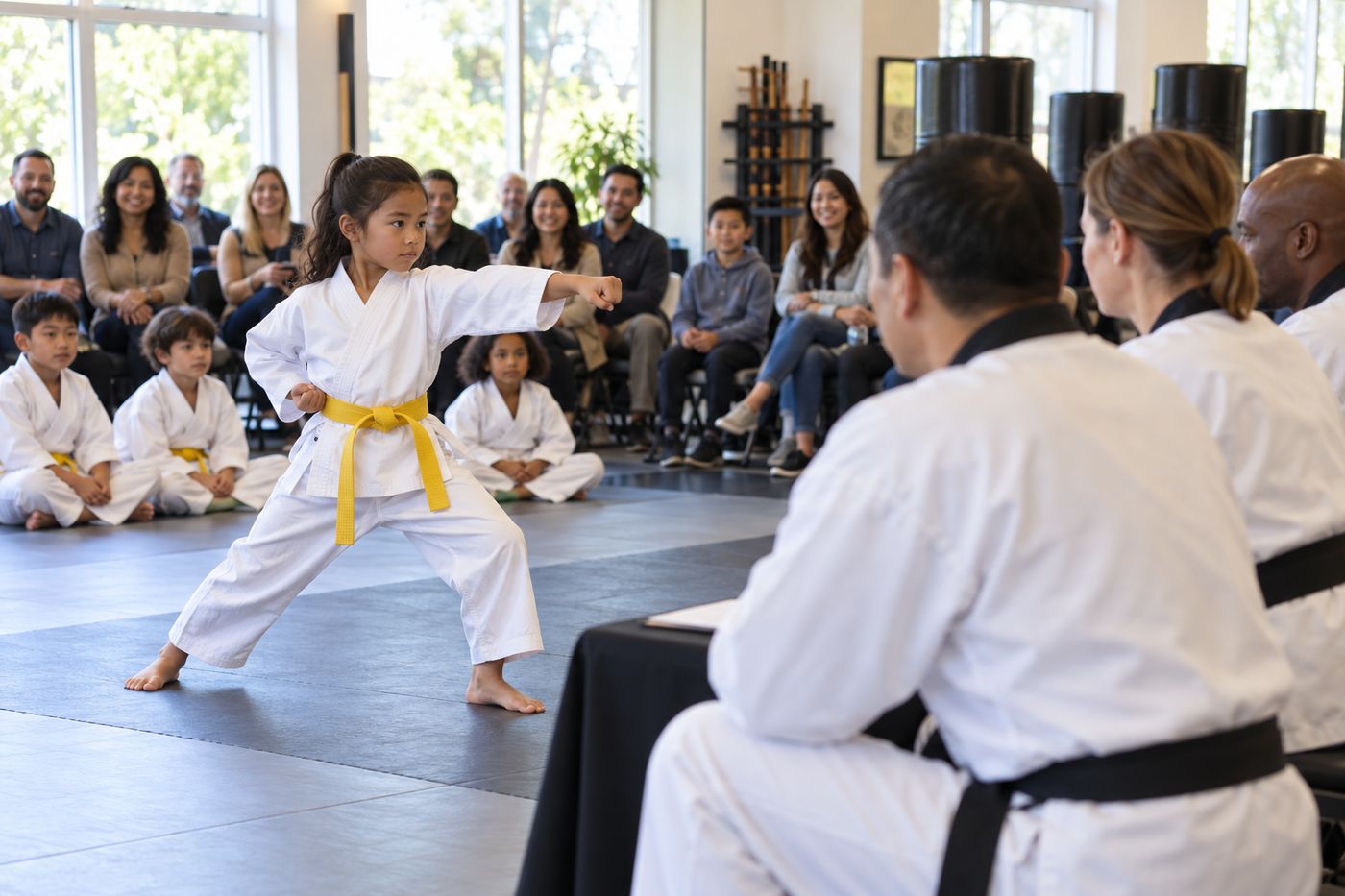
Taekwondo and karate schools usually hold formal tests every two to four months for colored belts. Children are invited when the instructor thinks they are ready, then perform in front of the instructor or a panel. A typical test includes basic techniques, the form (poomsae in Taekwondo, kata in karate) for their level, partner drills or light sparring, and often board breaking in Taekwondo. Some schools ask children questions about terminology or the school’s values. Most schools charge a testing fee, and black belt tests are bigger events, sometimes run over several days. See our Taekwondo belt test guide and karate belts and kata.
BJJ: promotion by the coach
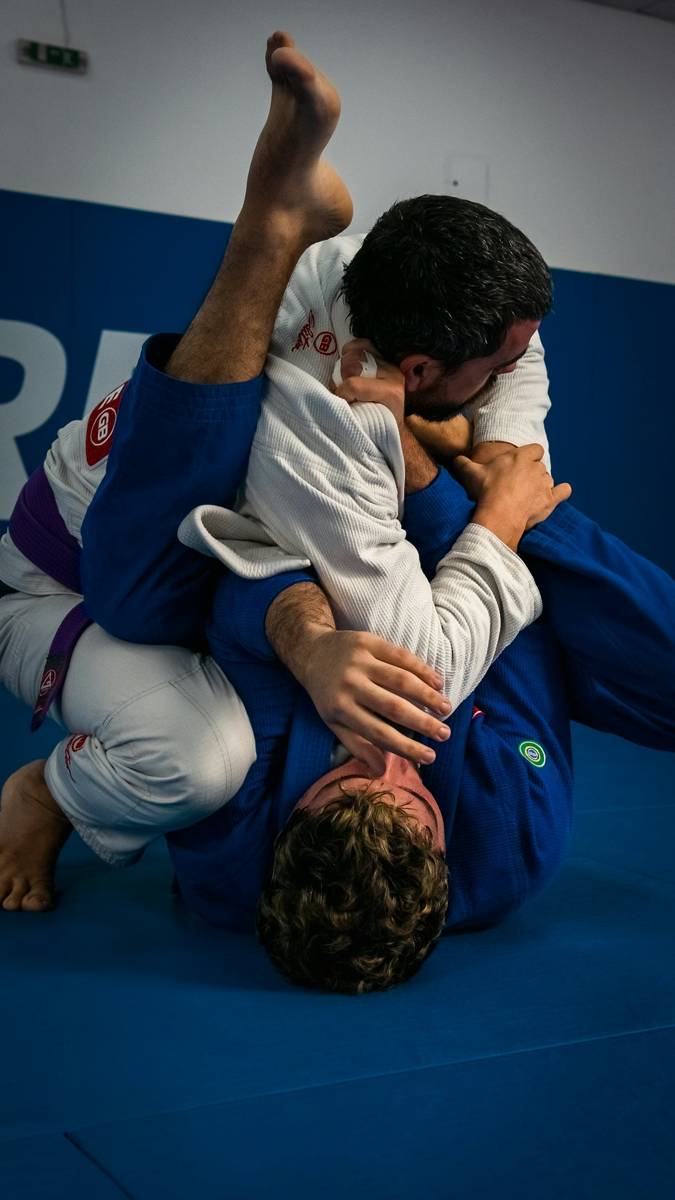
In Brazilian Jiu-Jitsu, formal tests are rare. The head instructor watches children in class and in live rolling and decides when they deserve a stripe or a new belt, often presenting them at a ceremony a few times a year. Some academies use technique check-lists. Fees are usually small or none. See BJJ belts for kids.
Judo: practical promotion
Judo coaches promote children based on breakfalls, throws, pins, attendance and attitude, and in some systems competition results. Promotions are often given in class and registered with the club’s national organization. Black belt candidates may perform a formal kata. See judo belts for kids.

Kung fu, wrestling and others
Kung fu schools vary widely: some use colored sashes and formal tests, others have no visible ranks. Wrestling, boxing and most Muay Thai gyms have no belts at all; children progress through skill levels, teams and competition.
Fees and frequency
In schools that charge, colored belt tests commonly cost around $30 to $100, and black belt tests can cost several hundred dollars. Frequent tests with fees are not automatically a problem, but if every child passes every test every couple of months regardless of skill, the tests may be more about revenue than progress. See how to spot a McDojo.
Helping your child prepare
Ask the instructor what will be on the test. Encourage your child to practise their form at home for a few minutes a day in the week before, and to get a good night’s sleep and eat a light meal beforehand. On the day, wash and press the uniform, arrive early, and remind your child that nerves are normal. Praise effort and courage, whatever the result.
What test day looks like
In Taekwondo and karate, a test usually happens on a weekend or in a special class, often with families watching. Children line up by belt, bow in, and are called up in small groups to show basics, their form or kata, a set of kicks or combinations and, at higher belts, sparring and a board break. Examiners watch closely and may ask a question about the meaning of a form or a Korean or Japanese word. Most schools then hold a short ceremony where children receive their new belt, sometimes the same day and sometimes at the next class. A clean, ironed uniform, a good night’s sleep and arriving early help a lot. Our printable belt test countdown covers the two weeks before.
If your child does not pass
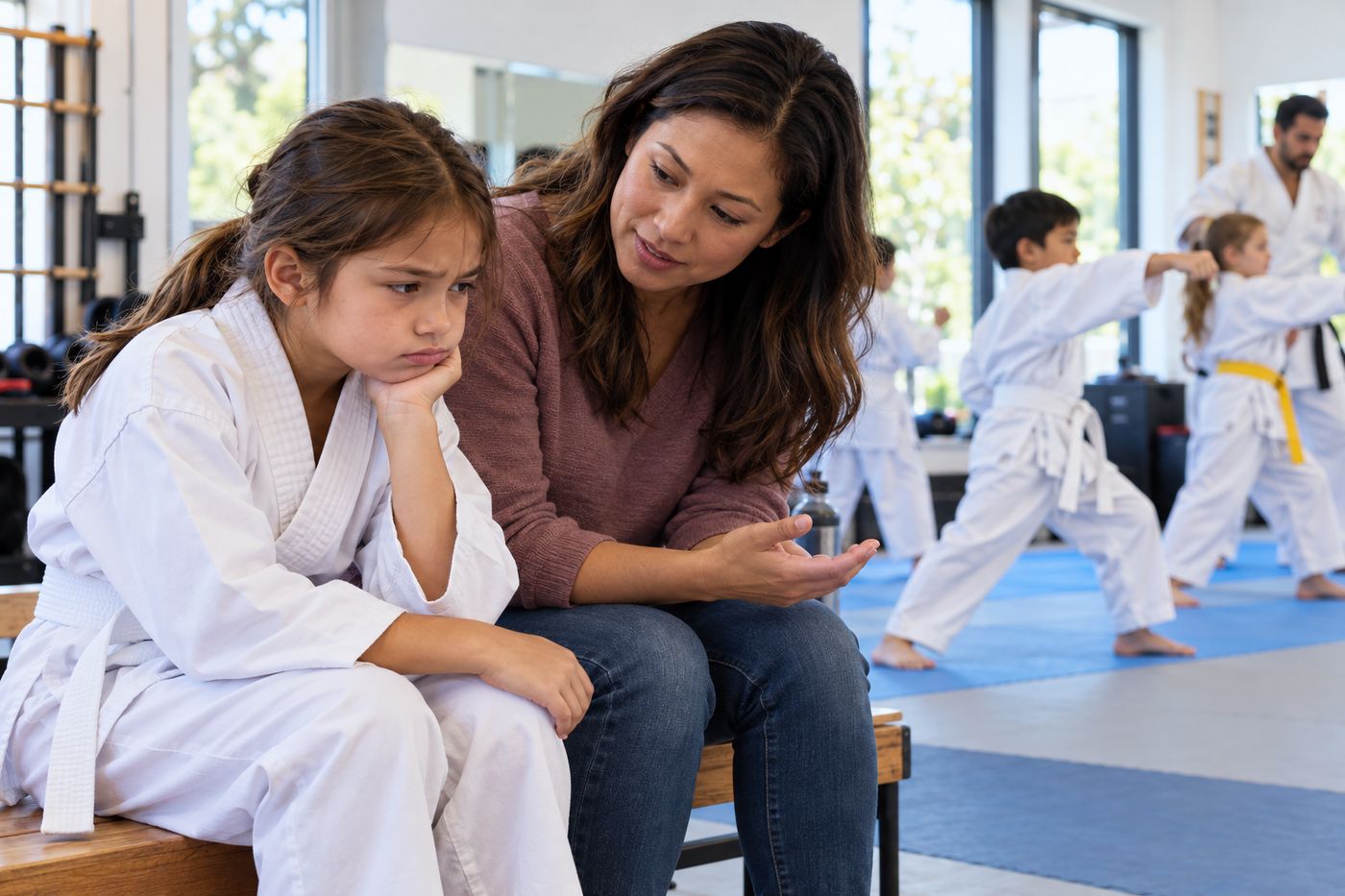
Not passing is disappointing but valuable. Stay calm and positive, ask the instructor exactly what to work on, and set small practice goals for the next attempt. Children who learn to try again often gain more from that test than from any easy pass.
Questions parents and students ask
Do all martial arts have belt tests?
No. Taekwondo and karate usually hold formal tests. BJJ coaches usually promote without a test, judo promotions are often given in class, kung fu varies, and wrestling and boxing have no belts at all.
How much do belt tests cost?
Colored belt tests in schools that charge for them commonly cost around $30 to $100, and black belt tests often cost several hundred dollars. Many BJJ academies and judo clubs charge little or nothing.
What if my child fails a belt test?
It happens, especially at higher ranks. Ask the instructor exactly what to work on and when the next chance is. Most children pass the second time and learn a lot about resilience.