On this page
The double kick, narae chagi (나래차기), is the signature kick of modern Olympic-style sparring. Two roundhouse kicks fire one after the other, left then right or right then left, with the body almost floating between them. The Korean name means “wing kick”, and the legs do look like flapping wings. It is fast, hard to defend, and a great way to land a second point when an opponent blocks the first kick.
What the double kick is used for
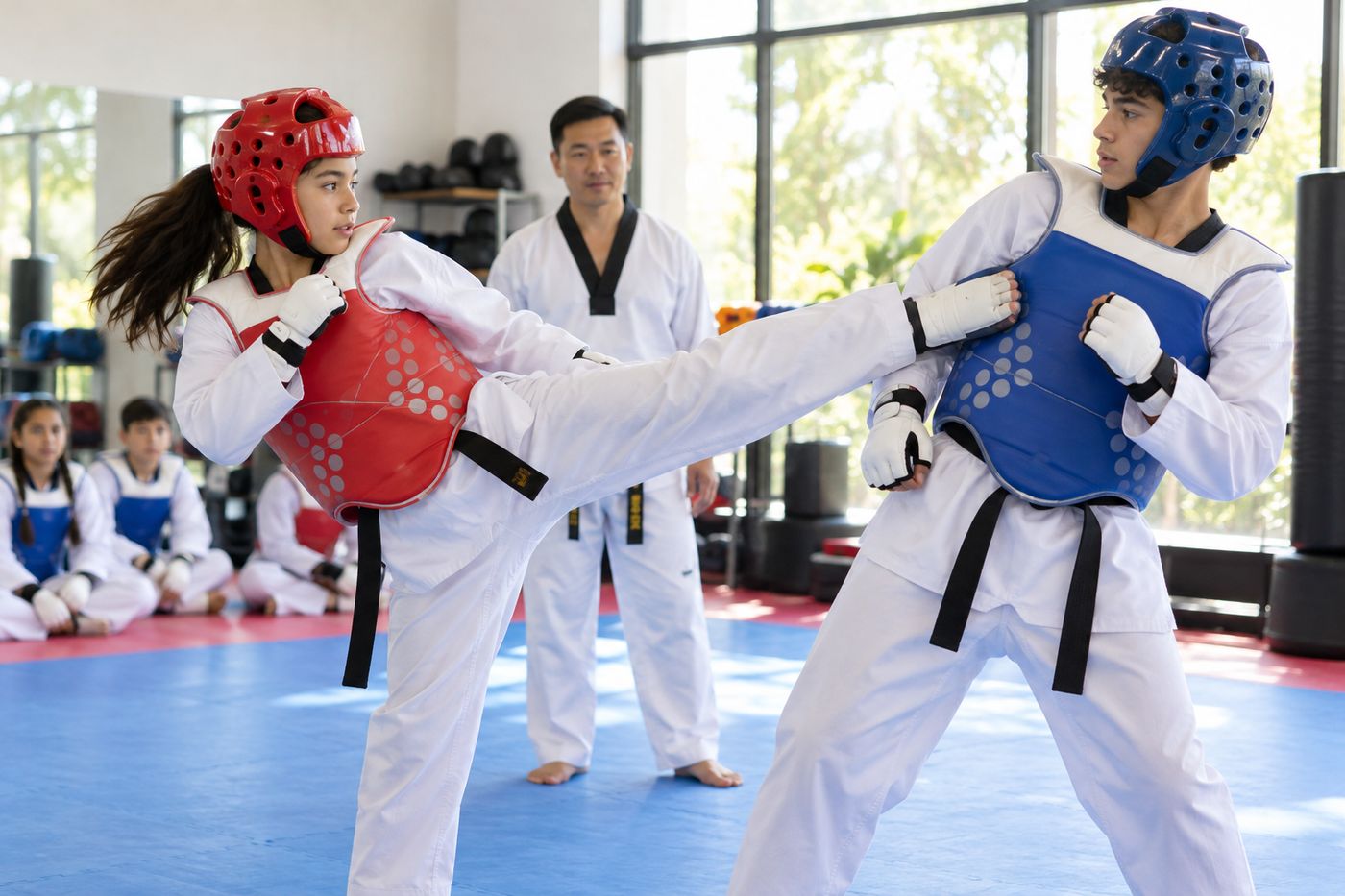
The double kick is a sparring technique. The first roundhouse forces the opponent to block or move, and the second, from the other leg, lands while they are still reacting. It is used both to attack and to counter an opponent who steps in. It is rarely seen outside sparring, because its value is speed and surprise rather than power.
How to do a double kick, step by step
- Start in a fighting stance, side-on, guard up, weight on the balls of the feet.
- Throw a roundhouse kick to the body with the back leg, pivoting on the standing foot.
- As the first kick lands, push off the standing foot and switch legs in the air, so the kicking leg drops down and the other leg comes up.
- Throw a second roundhouse kick with the other leg, pivoting as you land on the first kicking foot.
- Land back in your fighting stance, ready to kick again or move away.
The rhythm is “kick-kick” with almost no gap. Think of it as running with your hips turned sideways.
Common mistakes
Pausing between the kicks is the most common error. If both feet land between the two kicks, it is two separate roundhouses, and the opponent has time to react. The switch should happen while the first kick is still in contact or just finishing.
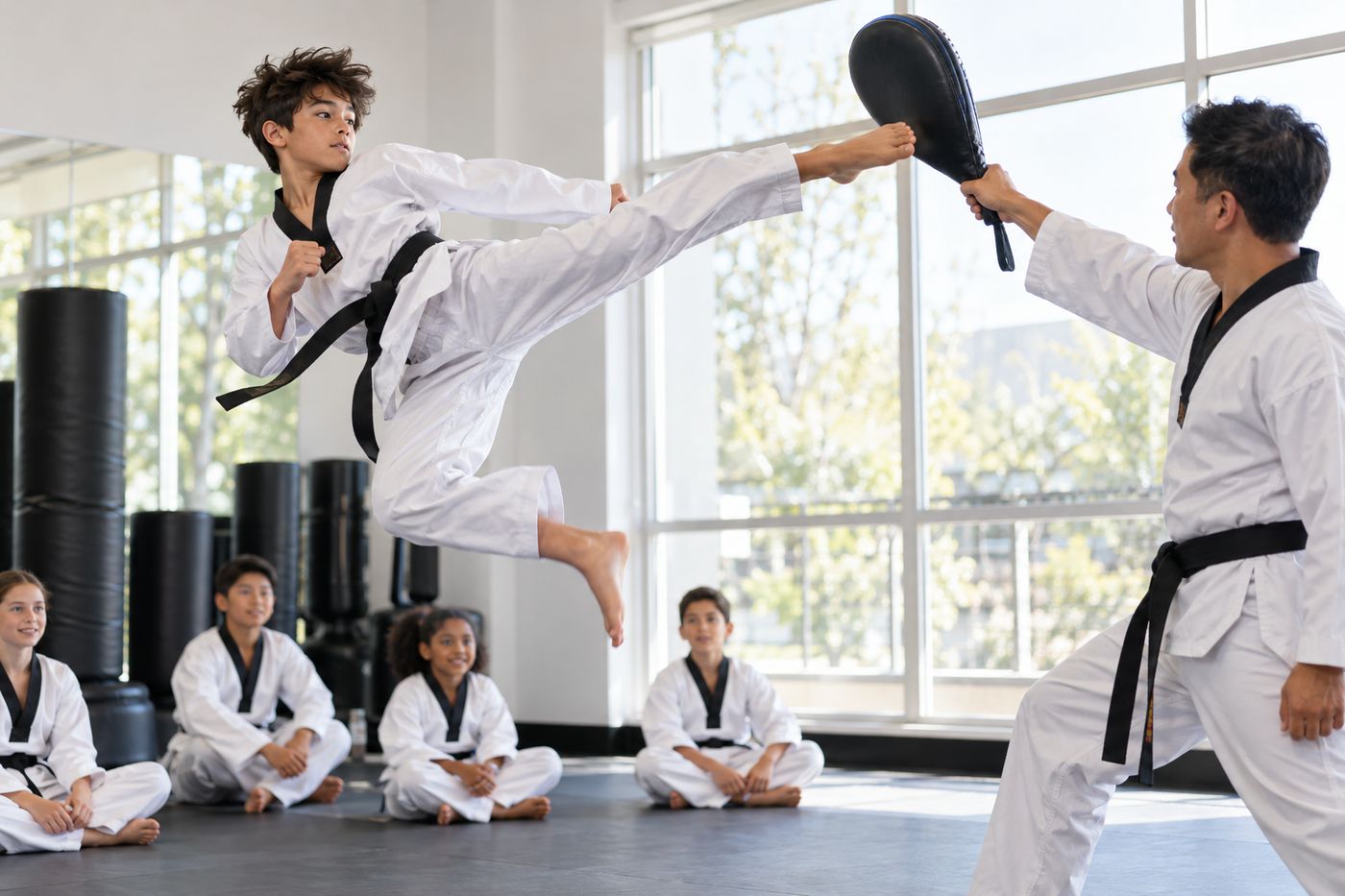
The second is jumping high. Double kicks stay low and quick; a big jump wastes time and gives the opponent a chance to counter. Third, students often drop their hands as they switch legs. Keep the guard up throughout. Last, kicking too wide makes both kicks slow. Keep each roundhouse tight and short.
Drills to practise at home
Switch steps. Without kicking, practise switching your stance on the spot as fast as you can for 20 seconds, staying light on the balls of your feet.
Low doubles. Throw double kicks at knee height, focusing on rhythm rather than height. Ten sets of two.
Pillow doubles. If someone can hold a pillow at stomach height, throw double kicks into it. Count how many clean sets you can do in 30 seconds.
Roundhouse first. The double kick is only as good as your roundhouse. Spend time on the single kick in our roundhouse guide.
Where it fits in your training
The double kick usually appears around purple belt, when sparring becomes regular. It works well after a push kick has moved the opponent back. For how it scores, see the sparring guide, and for every other kick, the kicks guide.
Questions parents and students ask
What is a double kick in Taekwondo?
Two roundhouse kicks thrown in quick succession, one with each leg, with the second kick launched while the first leg is still in the air or just landing. In Korean it is narae chagi, the wing kick, because the legs flap like wings.
Is a double kick the same as a double roundhouse with one leg?
No. Kicking twice with the same leg without putting it down is a separate drill, sometimes called a double roundhouse or a repeat kick. The narae chagi switches legs.
What belt learns the double kick?
Usually around purple or blue belt, once students are sparring regularly and their roundhouse kick is solid.