On this page
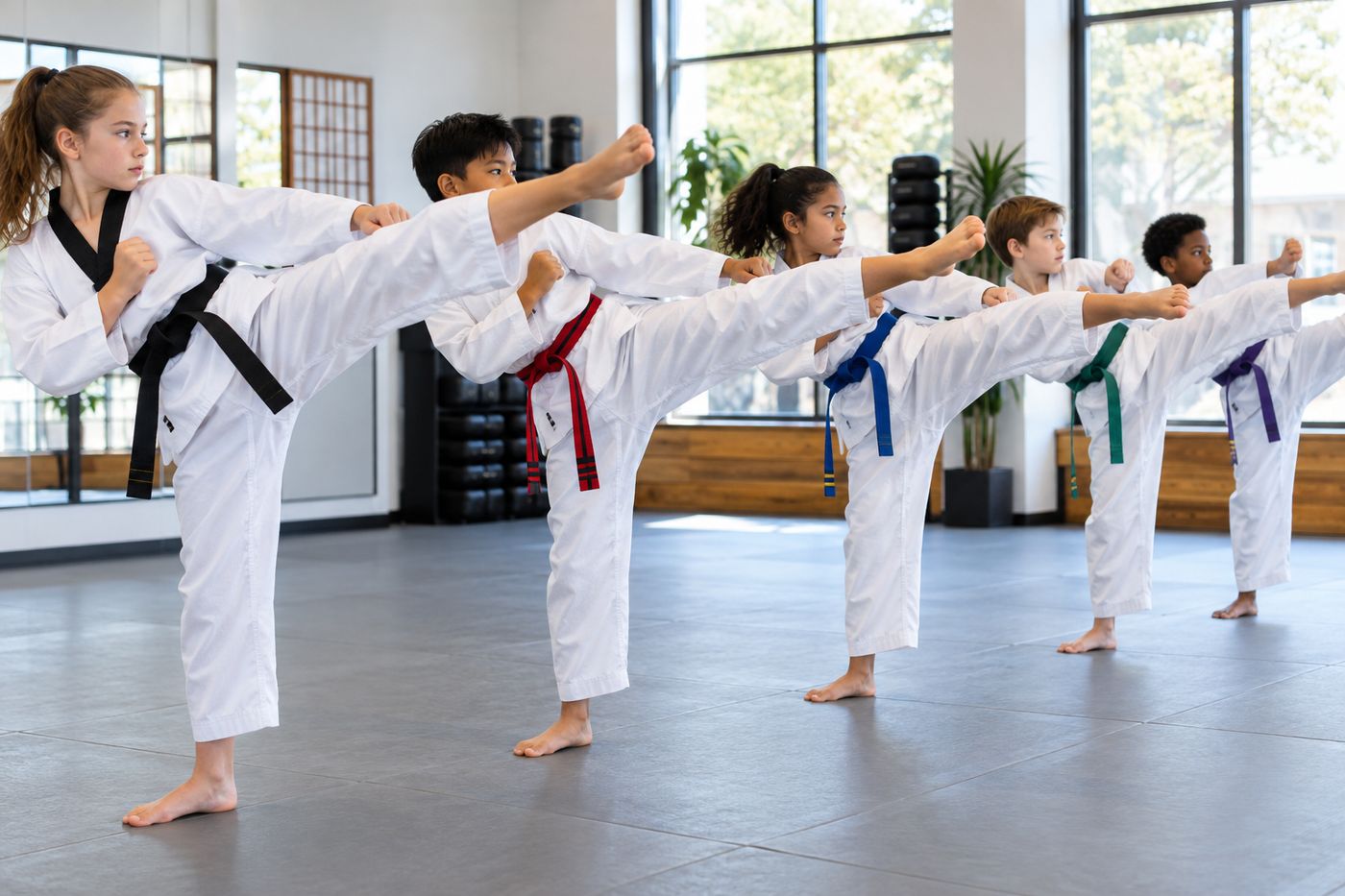
Taekwondo is known around the world for its kicks. Students learn more kicks, and spend more class time kicking, than in almost any other martial art. This page lists every kick a student is likely to meet from white belt to black belt and beyond, with its Korean name, what it is used for, the belt it is usually learned at, and a link to a full step-by-step guide.
How Taekwondo kicks are named
Once you know a handful of Korean words, kick names become easy to read. Almost every name ends in chagi (차기), kick. The word in front says which way the kick goes: ap (front), yeop (side), dwi (back), dollyeo (turning), naeryeo (downward), huryeo (sweeping or hooking), mireo (pushing). Two words can be added at the start: ttwieo (뛰어), jumping, and dwi again for spinning kicks, as in dwi huryeo chagi, the spinning hook kick. So ttwieo yeop chagi is a jumping side kick. You can hear all of these spoken in our Korean terms glossary.
The basic kicks
These are the kicks every student learns in the color belts, roughly in the order most schools teach them.
| Kick | Korean | Usually learned | What it is for |
|---|---|---|---|
| Front kick | 앞차기 ap chagi | White | Straight kick to the front; the first kick taught |
| Roundhouse kick | 돌려차기 dollyeo chagi | Yellow | The main sparring kick, to body or head |
| Crescent kicks | 안차기 · 바깥차기 an chagi, bakkat chagi | Yellow | Straight-leg arcs for flexibility and setups |
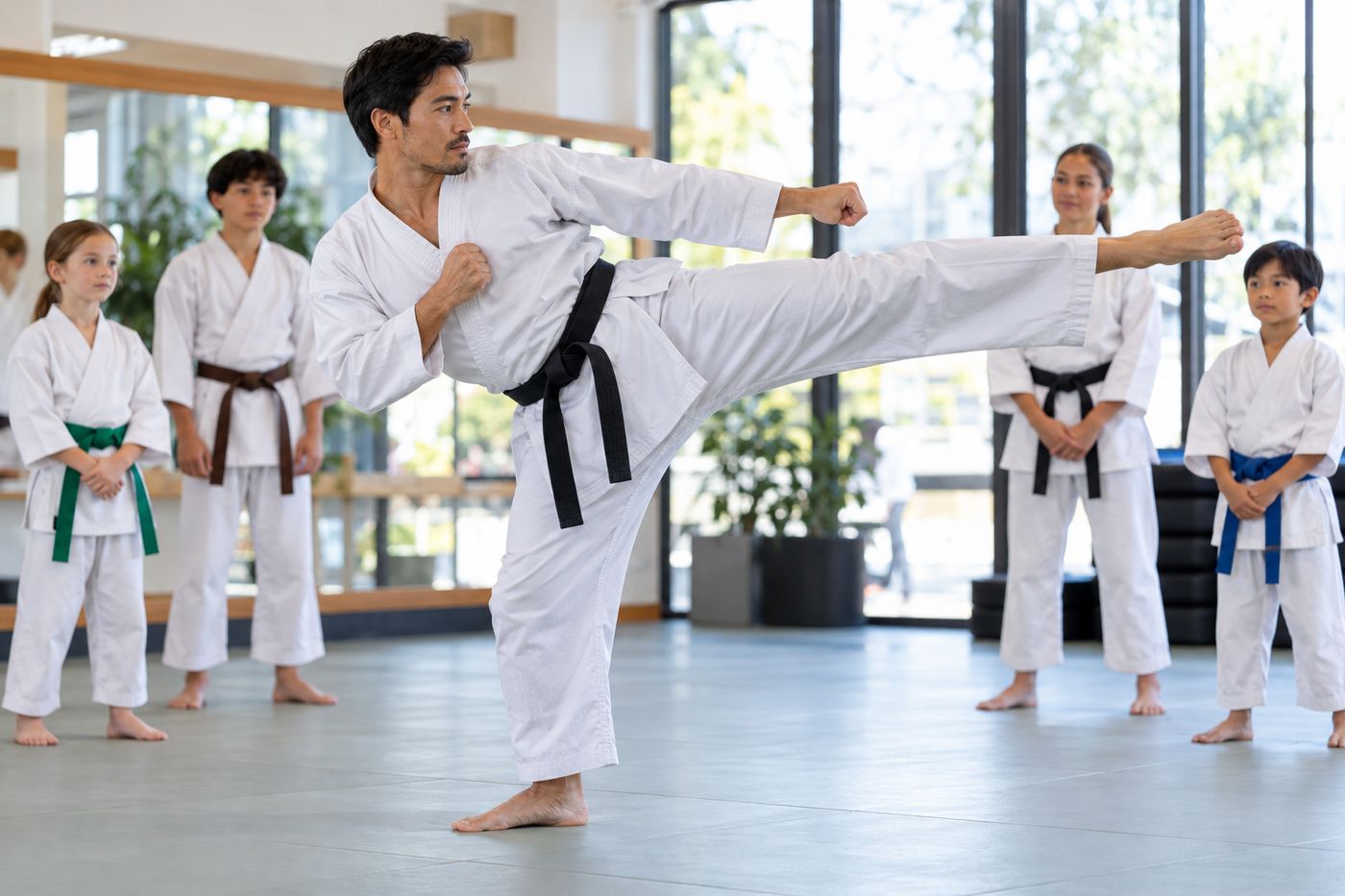
| Side kick | 옆차기 yeop chagi | Orange to green | Most powerful basic kick; breaking |
| Push kick | 밀어차기 mireo chagi | Green | Pushes an opponent away in sparring |
| Axe kick | 내려차기 naeryeo chagi | Green | Downward heel strike to the head |
| Back kick | 뒤차기 dwi chagi | Purple | Turning kick straight back; counters and breaking |
| Hook kick | 후려차기 huryeo chagi | Purple | Whips back with the heel to the head |
| Double kick | 나래차기 narae chagi | Purple | Two fast roundhouses, switching legs |
| Spinning hook kick | 뒤후려차기 dwi huryeo chagi | Blue | Spinning heel strike to the head |
| Twist kick | 비틀어차기 biteureo chagi | Blue | Outward-angle kick; a Kukkiwon basic |
Jumping and spinning kicks
These come later, usually from brown or red belt, once the basic version of each kick is solid. They are used in breaking, demonstrations and, in some cases, sparring.
| Kick | Korean | Usually learned | What it is for |
|---|---|---|---|
| Tornado kick | 돌개차기 dolgae chagi | Brown | Spinning roundhouse, the “360” |
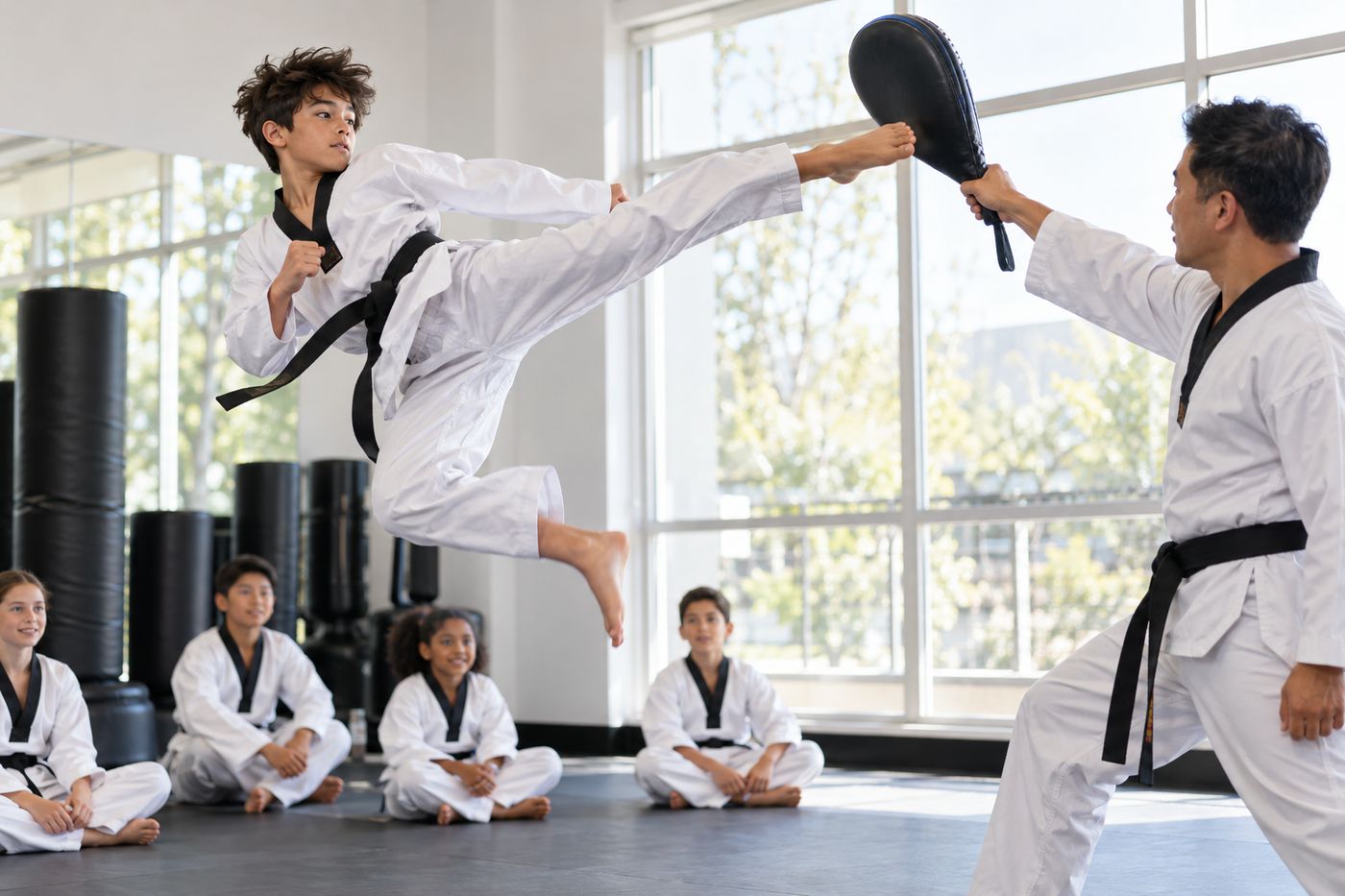
| Jumping side kick | 뛰어옆차기 ttwieo yeop chagi | Brown | Breaking; the flying side kick |
| Jumping front kick | 뛰어앞차기 ttwieo ap chagi | Red | In Taegeuk Pal Jang; high breaks |
| Jumping back kick | 뛰어뒤차기 ttwieo dwi chagi | Red | Powerful breaking kick and counter |
| 540 kick | 540 킥 | Red or later | Demonstration kick with one and a half turns |
| Jump spinning hook kick | 뛰어뒤후려차기 ttwieo dwi huryeo chagi | Red or black | High breaks and demonstrations |
The belt column is a typical guide for US schools. Your school may teach some kicks earlier or later.
How kicks score in sparring
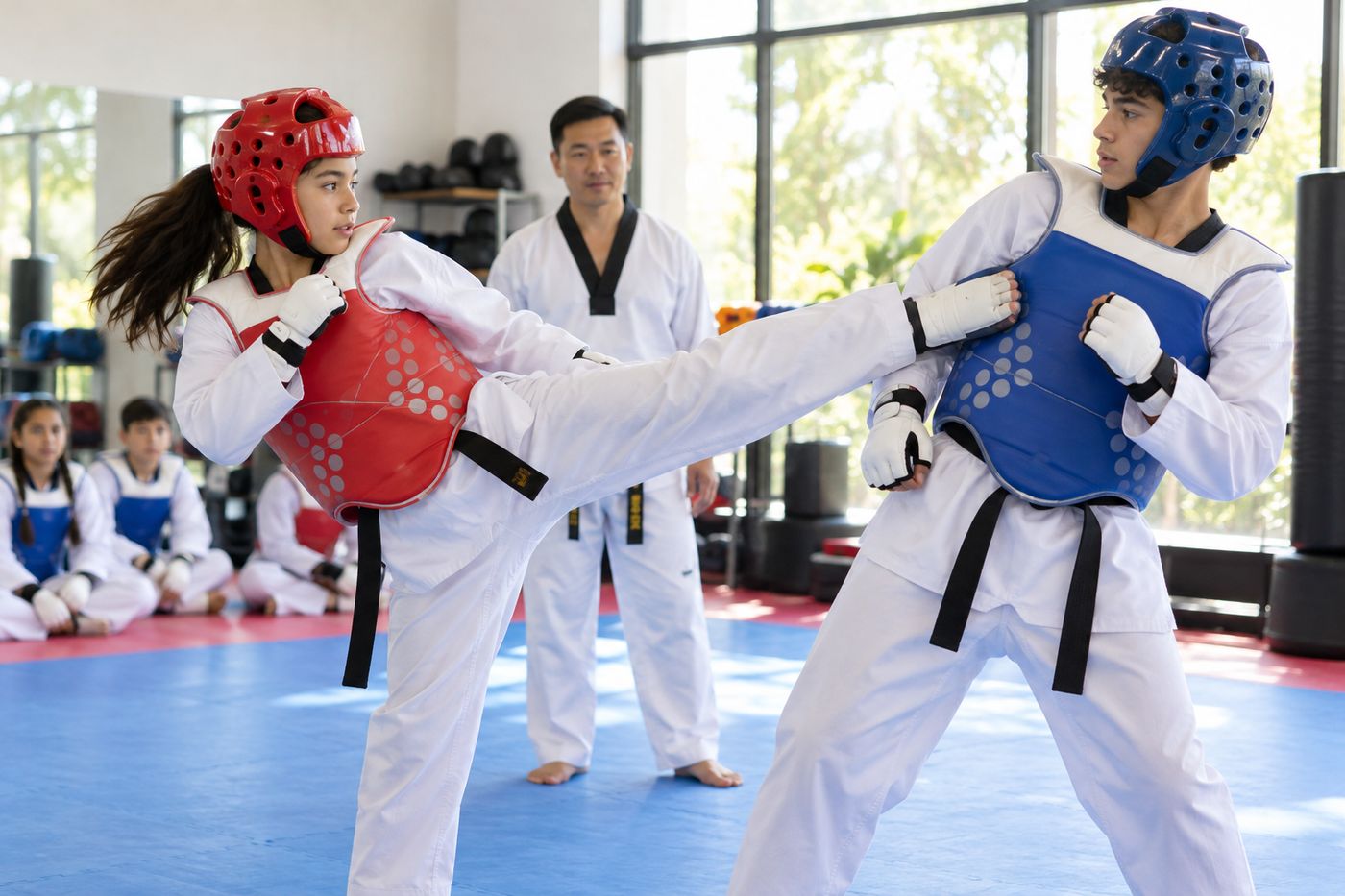
In Olympic-style sparring under World Taekwondo rules, a kick to the chest protector scores 2 points and a kick to the head 3. Turning kicks, such as the back kick, spinning hook kick and tornado kick, earn extra: 4 to the body and 5 to the head. That is why advanced sparrers spend so much time on spinning kicks. The rules are explained in our sparring guide.
Getting better at every kick
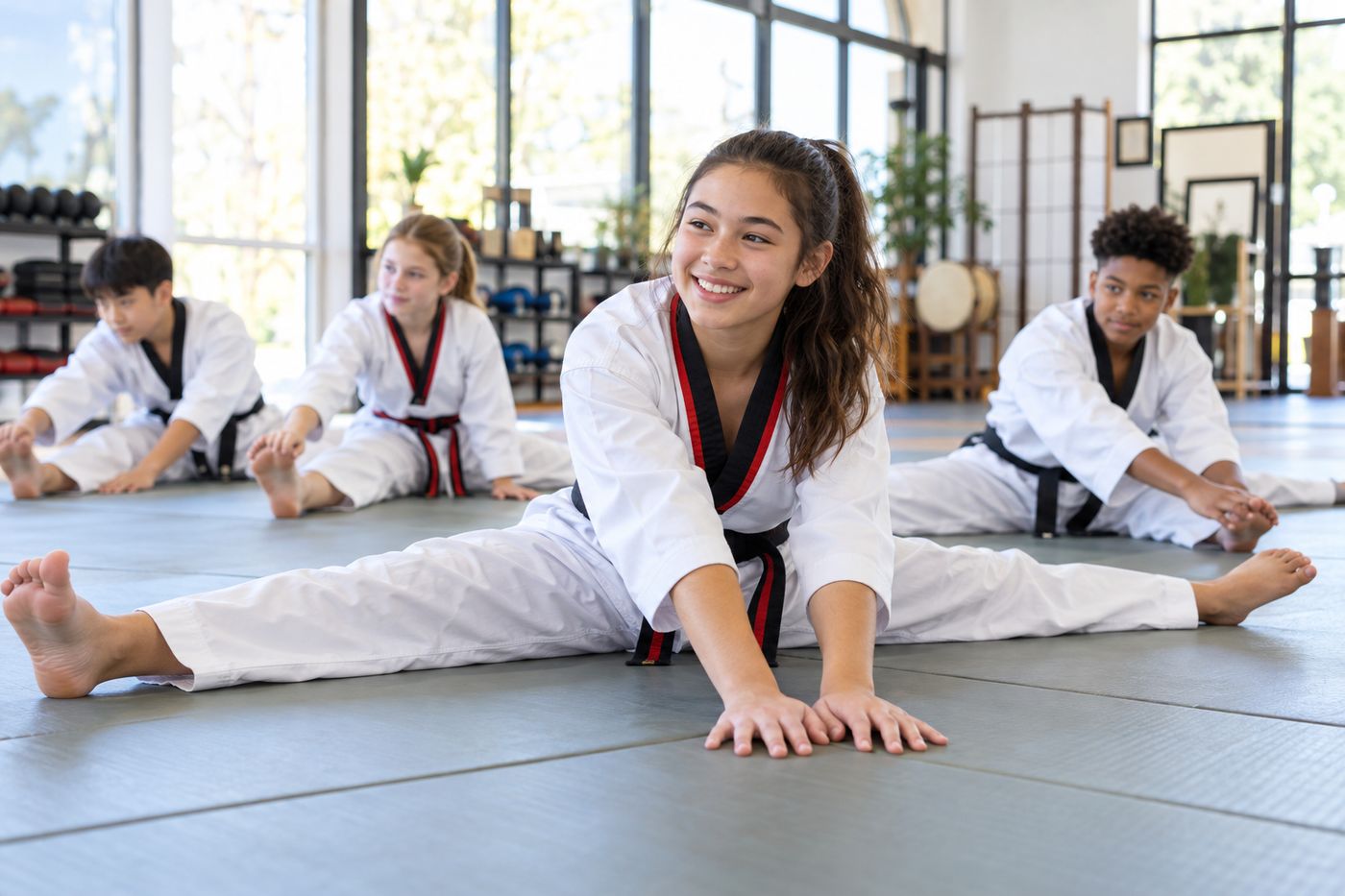
Three things improve every kick at once: flexibility in the hips and hamstrings, strength to hold the leg up, and a proper hip turn. Our guides to kicking higher and kicking harder cover the training that helps, with simple plans you can follow at home. And because many kicks show up in the forms, the forms section is a good place to see them in context.
Questions parents and students ask
How many kicks are there in Taekwondo?
There is no fixed number, because kicks combine with jumps, spins and different targets. Most schools teach about a dozen core kicks, and advanced students learn jumping, spinning and combination versions that bring the total to 20 or more.
What is the most important kick in Taekwondo?
The roundhouse kick (dollyeo chagi). It is the most used kick in Olympic sparring and appears on the pads at every belt from yellow upward. The front kick is the most important to learn first.
How are Taekwondo kicks named in Korean?
Most names end in chagi, meaning kick. A word in front describes it: ap (front), yeop (side), dwi (back), dollyeo (turning). Ttwieo in front means jumping, so ttwieo yeop chagi is a jumping side kick.